AI in Job Search: Optimize Your Resume for 2026 ATS

Anúncios
Leveraging AI in Your Job Search: 3 Tools to Optimize Your Resume for 2026 ATS
In the rapidly evolving landscape of job searching, simply having a well-written resume is no longer enough. As we approach 2026, the integration of Artificial Intelligence (AI) into recruitment processes is becoming more sophisticated and pervasive. Applicant Tracking Systems (ATS) are now powered by advanced AI algorithms, making it crucial for job seekers to understand and adapt to these changes. The key to securing your dream job lies in mastering AI resume optimization.
Anúncios
This comprehensive guide will delve into why AI is transforming the hiring process, what 2026 ATS means for your application, and most importantly, introduce you to three indispensable AI tools that will help you tailor your resume for maximum impact. By the end of this article, you’ll be equipped with the knowledge and resources to navigate the AI-driven job market with confidence, ensuring your resume not only gets seen but also stands out from the competition.
The AI Revolution in Recruitment: Understanding 2026 ATS
The recruitment industry has undergone a seismic shift, with AI emerging as a central player. Gone are the days when human eyes meticulously scanned every resume. Today, a staggering percentage of large companies utilize Applicant Tracking Systems (ATS) to filter and rank candidates. These systems are not just simple keyword matchers anymore; they are intelligent algorithms that leverage machine learning and natural language processing to identify the most suitable candidates based on a multitude of factors.
Anúncios
What is an ATS and How Has it Evolved?
An ATS is a software application designed to manage the recruitment process. From collecting and sorting applications to screening candidates and even scheduling interviews, ATS streamlines the hiring workflow for employers. Historically, ATS were rudimentary, primarily focusing on keyword matching. If your resume didn’t contain the exact keywords listed in the job description, it was often discarded without a human ever seeing it.
However, the 2026 ATS is a different beast. These advanced systems are powered by AI, enabling them to do much more than just keyword spotting. They can now:
- Contextual Understanding: AI-powered ATS can understand the context of your experience and skills, not just the presence of specific words. This means it can recognize synonyms, related concepts, and the overall relevance of your qualifications to the job description.
- Semantic Analysis: Beyond keywords, AI can analyze the semantic meaning of your resume content. It can identify patterns, assess the strength of your action verbs, and evaluate the impact of your achievements.
- Skill Gap Analysis: Some advanced ATS can even perform a skill gap analysis, comparing your stated skills against the required skills for the role and identifying potential areas where you might be lacking or exceptionally strong.
- Behavioral Insights: While still emerging, some AI tools are beginning to analyze language patterns to infer behavioral traits, though this aspect is often used in later stages of the recruitment process.
- Unbiased Screening (Aspirationally): One of the promises of AI in recruitment is to reduce human bias. By focusing on objective data points, AI aims to create a more equitable playing field, although algorithmic bias remains a critical concern that developers are actively addressing.
The implication for job seekers is clear: your resume must be designed not just for human readability, but also for AI comprehensibility. This is where AI resume optimization becomes paramount.
The Imperative of AI Resume Optimization for 2026
Why is AI resume optimization no longer optional but essential? Consider these compelling reasons:
- Increased Application Volume: The digital age has made applying for jobs incredibly easy, leading to a massive surge in applications for each open position. AI is the only way recruiters can efficiently sift through thousands of resumes.
- First Line of Defense: Your resume’s first encounter will almost certainly be with an AI-powered ATS. If it doesn’t pass this initial screening, it will never reach a human recruiter’s desk.
- Ranking and Scoring: ATS don’t just filter; they often rank resumes based on their perceived fit for the role. A highly optimized resume will rank higher, increasing its visibility.
- Efficiency for Recruiters: By pre-screening candidates, AI allows recruiters to focus their time on evaluating a smaller, more qualified pool of applicants, making their process more efficient.
- Staying Competitive: Your competitors are likely already using AI tools to optimize their resumes. To remain competitive, you must embrace these technologies as well.
Failing to optimize your resume for AI means risking your application being overlooked, regardless of how qualified you might be. It’s about speaking the language of the machines that are now gatekeepers to your next career opportunity.
Key Principles of AI-Friendly Resume Design
Before diving into specific tools, let’s establish some fundamental principles for creating an AI-friendly resume:
- Keyword Relevance: While 2026 ATS are smarter, keywords are still crucial. Identify the most important keywords from the job description and strategically incorporate them throughout your resume, especially in your summary, experience, and skills sections.
- Standard Formatting: Avoid overly complex designs, graphics, or non-standard fonts. AI struggles to parse information from visually rich or unconventional layouts. Stick to clean, chronological formats.
- Clear Headings: Use standard headings like "Experience," "Education," "Skills," and "Summary." This helps AI identify and categorize information correctly.
- Quantifiable Achievements: AI is excellent at recognizing numbers and metrics. Quantify your achievements whenever possible (e.g., "Increased sales by 15%" instead of "Increased sales").
- Action Verbs: Use strong, impactful action verbs to describe your responsibilities and accomplishments. AI can often recognize the strength and relevance of these verbs.
- Spell Check and Grammar: While seemingly basic, errors can confuse AI algorithms and signal a lack of attention to detail.
Now, let’s explore three powerful AI tools that can help you implement these principles and master AI resume optimization.
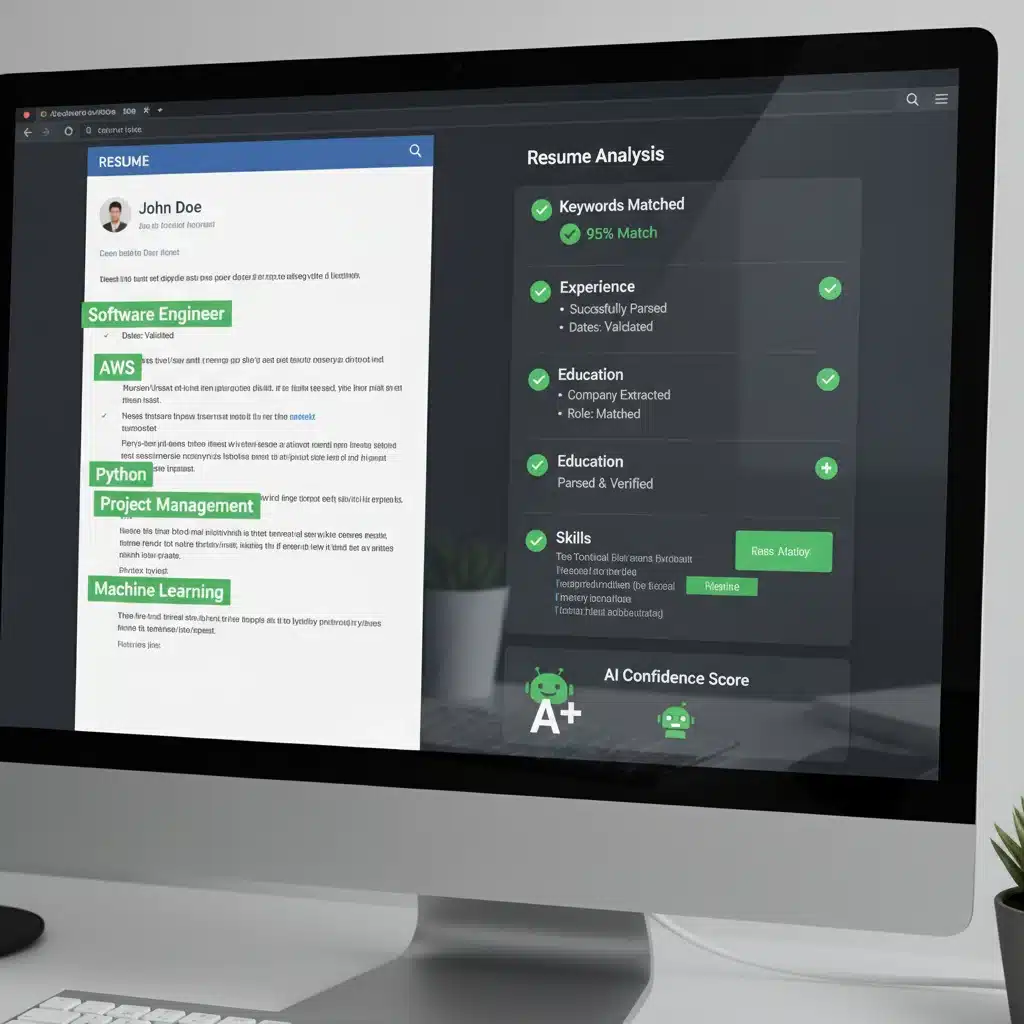
Tool 1: Resume Parsers and ATS Scanners (e.g., Jobscan, Resume Worded)
These tools are specifically designed to simulate how an ATS will read your resume. They act as your personal AI assistant, providing instant feedback on how well your resume aligns with a specific job description.
How They Work:
You upload your resume and paste the job description into the tool. The AI then analyzes both documents, comparing them against each other. It identifies missing keywords, highlights areas where your experience could be better articulated, and even points out formatting issues that might confuse an ATS.
Key Features and Benefits for AI Resume Optimization:
- Keyword Matching Score: Provides a percentage score indicating how well your resume matches the job description’s keywords. This is invaluable for gauging your initial ATS compatibility.
- Missing Keywords: Identifies crucial keywords from the job description that are absent from your resume, allowing you to strategically integrate them.
- Hard Skills & Soft Skills Analysis: Breaks down the required skills and shows how well your resume addresses them.
- ATS Compatibility Check: Flags common formatting errors or elements that might cause an ATS to misinterpret your information (e.g., unusual fonts, excessive use of tables, graphics).
- Action Verb Suggestions: Some tools offer suggestions for stronger action verbs to enhance the impact of your bullet points.
- Job Title Matching: Ensures your previous job titles are clearly understood by the ATS.
- Word Count Analysis: Helps ensure your resume isn’t too short or excessively long for the typical ATS processing.
Best Practices for Using Resume Parsers:
- Tailor for Each Application: Do not use a generic resume. Run your resume through the parser for every single job you apply for, using the specific job description.
- Iterate and Improve: Don’t expect a perfect score on your first try. Use the feedback to revise your resume, then re-run the scan until you achieve a high match score (aim for 80% or higher).
- Understand the Nuances: While crucial, a high match score isn’t the only factor. Ensure the keywords you add are genuinely relevant to your experience and don’t sound forced or artificial.
By leveraging these tools, you’re essentially getting a sneak peek into the ATS’s ‘mind,’ allowing you to proactively adjust your resume for optimal AI resume optimization.
Tool 2: Generative AI for Content Enhancement (e.g., ChatGPT, Google Gemini)
Generative AI models, such as ChatGPT and Google Gemini, have revolutionized content creation and can be powerful allies in enhancing your resume. While they shouldn’t write your entire resume from scratch, they are exceptional for refining language, generating compelling bullet points, and ensuring clarity.
How They Work:
You provide the AI with your raw experience, achievements, and the job description. The AI then uses its vast language models to generate improved phrasing, suggest relevant keywords, and help you articulate your accomplishments more effectively.
Key Features and Benefits for AI Resume Optimization:
- Bullet Point Expansion & Refinement: Feed the AI your basic job duties, and ask it to transform them into impactful, quantifiable achievement-oriented bullet points. For example, "Managed social media" can become "Spearheaded social media strategy, increasing engagement by 30% and driving 15% more traffic to the company website."
- Keyword Integration Suggestions: If you have a list of keywords from a job description, ask the AI to suggest natural ways to weave them into your experience descriptions without sounding repetitive.
- Summary and Objective Statement Crafting: Provide your career goals and key strengths, and the AI can help you draft concise, compelling summary or objective statements tailored to specific roles.
- Action Verb Enhancement: Ask the AI for a list of stronger action verbs relevant to your industry or specific achievements.
- Tone and Clarity Check: Request the AI to review sections of your resume for clarity, conciseness, and professional tone.
- Cover Letter Generation: While not strictly resume optimization, these tools can also help you draft highly personalized and keyword-rich cover letters that complement your optimized resume.
Best Practices for Using Generative AI:
- Provide Context: The more specific your prompts, the better the output. Include the job description, your original bullet points, and any specific requirements.
- Fact-Check Everything: AI can sometimes "hallucinate" or generate plausible but incorrect information. Always verify any facts, figures, or dates.
- Maintain Your Voice: Use the AI as an assistant, not a replacement for your own critical thinking. Ensure the final output still reflects your authentic experience and professional voice.
- Avoid Over-Reliance: Do not let the AI write your entire resume. Your personal touch and genuine experience are irreplaceable. Use it to enhance, not create.
Generative AI is a powerful tool for refining your language and ensuring your achievements are presented in the most impactful way, significantly contributing to effective AI resume optimization.

Tool 3: AI-Powered Grammar and Style Checkers (e.g., Grammarly, ProWritingAid)
While often overlooked, impeccable grammar, spelling, and professional style are foundational to any successful resume, especially when interacting with AI. AI-powered grammar and style checkers go beyond basic spell-check, offering sophisticated analysis that ensures your resume is polished and professional.
How They Work:
These tools integrate with your writing process, analyzing your text in real-time or upon submission. They use AI and machine learning to identify grammatical errors, punctuation mistakes, stylistic inconsistencies, wordiness, and even plagiarism.
Key Features and Benefits for AI Resume Optimization:
- Advanced Grammar & Punctuation: Catches complex grammatical errors that traditional spell checkers miss, ensuring your resume is free of mistakes that could detract from your professionalism.
- Clarity and Conciseness: Identifies wordy sentences, passive voice, and jargon, suggesting more direct and impactful phrasing. This is critical for ATS, which prefer clear, scannable content.
- Tone Detection: Some tools can analyze the tone of your writing, helping you maintain a professional, confident, and achievement-oriented voice throughout your resume.
- Vocabulary Enhancement: Suggests stronger synonyms for common words, helping you use a richer and more precise vocabulary, which can subtly improve AI parsing.
- Consistency Checks: Ensures consistent formatting for dates, titles, and bullet points, which is important for both human readability and AI parsing.
- Plagiarism Checker: While less relevant for a personal resume, it’s a valuable feature for ensuring originality in other professional documents.
Best Practices for Using AI-Powered Checkers:
- Run the Full Scan: Don’t just rely on the basic checks. Utilize all the advanced features these tools offer, including clarity, engagement, and delivery scores.
- Review All Suggestions: Don’t blindly accept every suggestion. Some might alter your intended meaning or style. Critically evaluate each proposed change.
- Proofread Manually: Even with the best AI tools, a final manual proofread is essential. A fresh pair of human eyes can catch nuances that AI might miss.
- Integrate with Your Workflow: Use the browser extensions or desktop apps to integrate these tools directly into your writing process, making real-time corrections.
A flawless resume, free of errors and written with precision, not only impresses human recruiters but also allows AI to parse your information without confusion, reinforcing your commitment to AI resume optimization.
Beyond the Tools: A Holistic Approach to AI Resume Optimization
While these three AI tools are incredibly powerful, remember that AI resume optimization is part of a larger strategy. Here are additional considerations for your 2026 job search:
- Understand the Job Description Deeply: Before using any tool, meticulously read and understand the job description. Highlight key responsibilities, required skills, and desired qualifications. This is your blueprint.
- Tailor, Tailor, Tailor: I cannot stress this enough. A generic resume is a death sentence in the AI-driven job market. Every application requires a customized resume and cover letter.
- Networking is Still Key: While AI streamlines initial screening, human connections remain vital. Network, informational interviews, and referrals can bypass some ATS hurdles.
- Optimize Your LinkedIn Profile: Your LinkedIn profile is often the next stop for recruiters after your resume. Ensure it’s also keyword-rich and consistent with your resume. AI tools can also help optimize your profile.
- Continuous Learning: The AI landscape is constantly changing. Stay informed about new tools and best practices in resume optimization.
- Practice Interview Skills: Getting past the ATS is only the first step. Practice your interviewing skills, both traditional and potentially AI-driven video interviews.
- Seek Feedback: Have a trusted friend, mentor, or career coach review your optimized resume. A fresh perspective can catch things you missed.
The goal of AI resume optimization is not to trick the system, but to present your qualifications in a way that AI can accurately and efficiently understand, ensuring your genuine suitability for a role is recognized.
The Future of AI in Hiring: What to Expect Post-2026
The evolution of AI in recruitment won’t stop at 2026. We can anticipate even more sophisticated developments:
- Predictive Analytics: AI will likely become even better at predicting candidate success based on a wider array of data points, including career trajectories and learning agility.
- Hyper-Personalized Matching: Expect AI to offer increasingly precise matches between candidates and roles, considering not just skills but also cultural fit and potential for growth.
- AI-Driven Candidate Engagement: AI chatbots and virtual assistants may become more common for initial candidate interactions, answering questions and providing application status updates.
- Ethical AI Frameworks: Increased focus on developing and implementing ethical AI frameworks to mitigate bias and ensure fairness in hiring.
- Skill-Based Hiring Emphasis: AI’s ability to objectively assess skills may lead to a greater emphasis on demonstrated skills over traditional credentials.
For job seekers, this means continuous adaptation and a proactive approach to skill development and personal branding. Embracing tools for AI resume optimization now will set you up for long-term success in this dynamic environment.
Conclusion: Your Path to AI-Powered Career Success
The integration of AI into the job search process is not a hurdle to overcome, but an opportunity to leverage. By understanding the nuances of 2026 ATS and utilizing the right AI tools, you can transform your resume from a static document into a dynamic, AI-optimized asset.
The three tools discussed – resume parsers, generative AI for content enhancement, and AI-powered grammar/style checkers – form a powerful toolkit for any modern job seeker. They empower you to craft resumes that resonate with both intelligent algorithms and human recruiters, significantly increasing your chances of landing interviews and ultimately, your desired job.
Start applying the principles of AI resume optimization today. Invest time in tailoring your applications, refining your language with AI assistance, and ensuring every word on your resume serves a purpose. The future of work is here, and with AI as your ally, your career possibilities are limitless. Embrace the change, optimize your approach, and step confidently into your next professional chapter.
Autor