
Federal Education Policy in 2026: Updates on Funding and Standards Across the Nation
As the calendar pages turn, the landscape of education in the United States is constantly evolving. With each passing year, new challenges emerge, and innovative solutions are sought to ensure that every student has access to quality education. The year 2026 promises to be a pivotal one for American schools, with significant updates anticipated in Federal Education Policy. These changes are not merely bureaucratic adjustments; they represent a concerted effort to reshape how schools are funded, how students are taught, and how educational outcomes are measured across the nation. Understanding these forthcoming policies is crucial for educators, parents, policymakers, and indeed, anyone invested in the future of our nation’s youth.
Anúncios
The role of the federal government in education is multifaceted, often acting as a catalyst for change, an equalizer of opportunity, and a guarantor of basic standards. From the landmark Elementary and Secondary Education Act (ESEA) of 1965 to its more recent reauthorization as the Every Student Succeeds Act (ESSA), federal legislation has consistently aimed to address disparities, promote accountability, and foster innovation. The updates expected in 2026 will build upon this historical foundation, seeking to refine existing frameworks and introduce new initiatives tailored to the contemporary educational environment. This article delves deep into the anticipated shifts in Federal Education Policy, exploring the nuances of funding changes, the evolution of national standards, and the potential impact on educational stakeholders.
Understanding the Core Tenets of Federal Education Policy
Before examining the specific updates for 2026, it’s essential to grasp the fundamental principles that guide Federal Education Policy. At its heart, federal involvement in education aims to achieve several key objectives:
- Ensuring Equity: Addressing educational disparities among different demographic groups, socioeconomic statuses, and geographic regions. Programs like Title I funding are prime examples of this commitment.
- Promoting Accountability: Establishing mechanisms to hold schools and districts responsible for student achievement and progress. ESSA’s accountability frameworks are designed to identify and support struggling schools.
- Supporting Special Populations: Providing resources and protections for students with disabilities (IDEA), English language learners, and other vulnerable groups.
- Fostering Innovation: Encouraging research, development, and implementation of effective educational practices and technologies.
- Maintaining National Standards: While not dictating curriculum, the federal government often influences academic standards through incentives and research, promoting college and career readiness.
The forthcoming changes in 2026 are expected to reinforce these tenets while adapting them to new societal needs and pedagogical advancements. The discussions around these updates are often complex, involving diverse perspectives from state and local governments, educational organizations, civil rights groups, and parent advocates. The ultimate goal is to create a more robust, equitable, and effective educational system for all American students.
Anúncios
Anticipated Funding Updates in 2026: A Closer Look
One of the most significant aspects of Federal Education Policy is its impact on school funding. Federal dollars often supplement state and local budgets, providing critical resources for programs that might otherwise be underfunded. For 2026, several key areas of federal funding are expected to see notable adjustments.
Increased Investment in Title I Programs
Title I of the Elementary and Secondary Education Act remains the cornerstone of federal aid to schools. It provides financial assistance to local educational agencies (LEAs) and schools with high numbers or high percentages of children from low-income families. These funds are crucial for ensuring that all children meet challenging state academic standards. In 2026, there is a strong push for increased appropriations for Title I, reflecting a recognition of the growing economic disparities exacerbated by recent global events. This potential increase would allow schools to:
- Hire more qualified teachers and support staff.
- Implement evidence-based instructional strategies.
- Provide targeted interventions for struggling students.
- Invest in professional development for educators.
- Expand access to early childhood education programs.
The aim is to close achievement gaps more effectively and provide a stronger foundation for students in underserved communities. 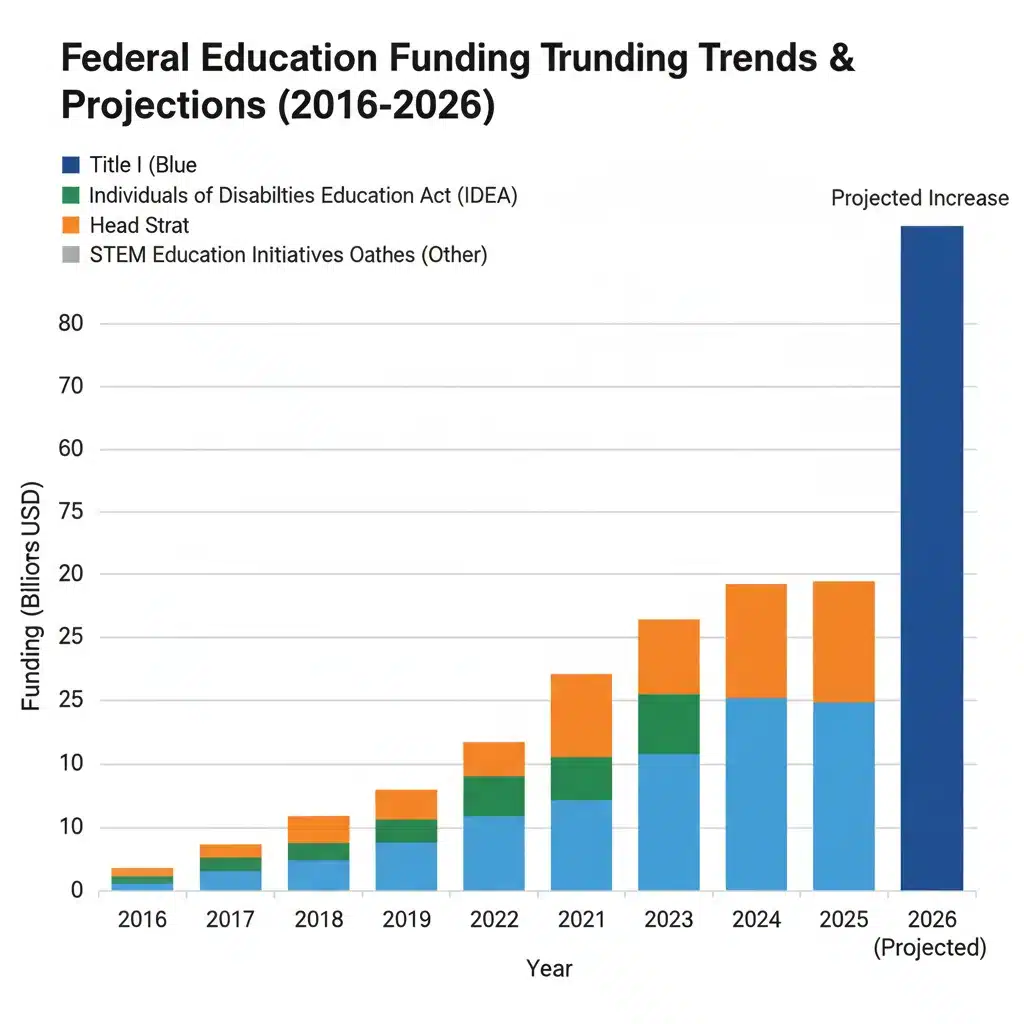
Revisions to IDEA Funding and Support
The Individuals with Disabilities Education Act (IDEA) guarantees free appropriate public education (FAPE) for children with disabilities. While the federal government has historically promised to cover a significant portion of the “excess costs” of special education, it has rarely met its full funding commitment. 2026 may see renewed efforts to move closer to the 40% federal funding target, which would significantly alleviate the financial burden on states and local districts. This would enable schools to:
- Enhance specialized instructional services and therapies.
- Reduce caseloads for special education teachers.
- Invest in assistive technologies and accessible learning materials.
- Improve transition services for students moving from school to post-secondary education or employment.
- Offer more comprehensive early intervention programs.
Such an increase in IDEA funding would be transformative, ensuring that students with disabilities receive the individualized support they need to thrive.
New Initiatives for STEM and Workforce Development
Recognizing the critical need for a skilled workforce in science, technology, engineering, and mathematics (STEM), as well as other high-demand fields, Federal Education Policy in 2026 is expected to include new or expanded funding streams for STEM education and vocational training. These initiatives might involve:
- Grants for schools to develop innovative STEM curricula and programs.
- Partnerships between schools and local industries to provide real-world learning experiences.
- Funding for career and technical education (CTE) pathways, including apprenticeships and certifications.
- Support for professional development for STEM and CTE educators.
- Programs aimed at increasing participation of underrepresented groups in STEM fields.
These investments are designed to prepare students for the jobs of the future, fostering economic growth and national competitiveness.
Addressing Mental Health and Wellness in Schools
The growing recognition of the importance of student mental health has led to calls for increased federal support in this area. In 2026, Federal Education Policy is likely to allocate more resources towards school-based mental health services. This could include funding for:
- Hiring more school counselors, psychologists, and social workers.
- Implementing universal mental health screening programs.
- Providing professional development for staff on trauma-informed practices and mental health first aid.
- Developing partnerships with community mental health providers.
- Creating safe and supportive school environments that promote student well-being.
These initiatives aim to create more holistic support systems for students, recognizing that academic success is intrinsically linked to mental and emotional well-being.
Evolving National Standards and Accountability Frameworks
Beyond funding, Federal Education Policy also plays a significant role in shaping national educational standards and accountability measures. While ESSA shifted much of the accountability design to states, the federal government still provides guidance and oversight.
Refining Academic Standards for the 21st Century
While the federal government does not mandate a national curriculum, it often encourages states to adopt rigorous academic standards. In 2026, there may be new federal guidance or incentives for states to review and update their standards to better reflect the skills and knowledge needed in a rapidly changing world. This could involve:
- A greater emphasis on critical thinking, problem-solving, and digital literacy across all subjects.
- Integration of interdisciplinary learning and real-world applications.
- Development of more robust standards for social-emotional learning (SEL).
- Consideration of global competencies and cultural awareness.
These refinements aim to ensure that American students are competitive on a global scale and prepared for complex challenges.
Innovations in Assessment and Accountability
The debate over standardized testing and school accountability is ongoing. For 2026, Federal Education Policy might explore new approaches to assessment that move beyond traditional high-stakes tests. This could include:
- Encouraging states to experiment with competency-based assessments and performance-based tasks.
- Utilizing multiple measures of student success, including growth models, attendance rates, and graduation rates.
- Providing flexibility for states to develop alternative accountability systems that better serve their unique populations.
- Investing in research to develop more equitable and culturally responsive assessment tools.
The goal is to create accountability systems that are both fair and effective in identifying areas for improvement and celebrating success. 
Focus on Educator Development and Retention
A critical component of any effective education system is a high-quality teaching force. Federal Education Policy in 2026 is expected to place a renewed emphasis on supporting educators, from recruitment to retention. Potential initiatives include:
- Federal grants for teacher preparation programs, especially those focused on high-need areas and subjects.
- Funding for mentorship programs for new teachers and ongoing professional development for experienced educators.
- Incentives for teachers to work in underserved communities or in subjects facing shortages.
- Support for programs that promote teacher leadership and voice in policy decisions.
- Addressing teacher well-being and reducing burnout through various support mechanisms.
Investing in educators is an investment in the future of our students and the strength of our educational system.
The Impact of Federal Education Policy on Various Stakeholders
The changes in Federal Education Policy for 2026 will reverberate throughout the entire educational ecosystem, affecting various stakeholders in profound ways.
For Students and Families
Ultimately, all federal education policies are designed to benefit students. Increased funding for Title I and IDEA means more resources and individualized support for those who need it most. Enhanced STEM and CTE programs will open new pathways for career readiness. Greater attention to mental health will create more supportive and inclusive school environments. Families will likely see more transparency in school performance and greater opportunities for engagement in their children’s education. The aim is to ensure that every child, regardless of background or ability, has the chance to reach their full potential.
For Educators and School Leaders
Teachers and administrators are on the front lines of implementing federal policies. While new mandates can sometimes present challenges, the anticipated updates for 2026 aim to provide more support and resources. Increased funding can lead to smaller class sizes, better professional development, and access to more innovative tools. Revised accountability measures may offer more flexibility and a greater focus on growth. However, school leaders will need to effectively navigate these changes, ensuring that federal funds are utilized strategically and that new standards are integrated seamlessly into school practices.
For State and Local Governments
States and local educational agencies (LEAs) play a crucial role in translating federal policy into action. While federal funds come with certain requirements, ESSA has empowered states with more autonomy in designing their accountability systems and intervention strategies. The 2026 updates will likely continue this balance, providing federal guidance and resources while allowing states to tailor programs to their specific contexts. States will need to align their own education laws and funding mechanisms with federal initiatives to maximize benefits for their schools and students.
For Higher Education and Workforce Development
The impact of K-12 Federal Education Policy extends beyond high school. Students who are better prepared academically and emotionally are more likely to succeed in higher education and the workforce. Increased emphasis on STEM and CTE pathways will create a stronger pipeline of skilled individuals entering colleges, universities, and technical training programs. Collaboration between K-12 institutions and higher education will become even more vital in creating seamless transitions for students and addressing the evolving needs of the labor market.
Challenges and Opportunities Ahead
While the anticipated updates to Federal Education Policy in 2026 present numerous opportunities for improvement, they also come with inherent challenges. Funding increases, while welcome, must be sustained and distributed equitably. New standards and assessment methods require careful implementation and ongoing evaluation to ensure effectiveness. Addressing the diverse needs of millions of students across thousands of districts is a monumental task that requires continuous collaboration and adaptation.
One of the persistent challenges will be ensuring that policies are evidence-based and responsive to the real-world experiences of students and educators. There will be a continued need for robust research and data collection to inform policy decisions and measure their impact. Furthermore, maintaining bipartisan support for education initiatives will be crucial for long-term stability and success, transcending political cycles and priorities.
However, the opportunities presented by a renewed focus on Federal Education Policy are immense. By investing in our schools, supporting our educators, and prioritizing the well-being of our students, we can build a more resilient, innovative, and equitable educational system. The year 2026 could mark a significant step forward in achieving the promise of quality education for every child in America, fostering a generation prepared to tackle the challenges and opportunities of the future.
Preparing for the Future: What’s Next?
As 2026 approaches, stakeholders across the educational spectrum should actively engage with the discussions and proposed legislation surrounding Federal Education Policy. This includes:
- Staying Informed: Regularly consulting official government sources, educational organizations, and reputable news outlets for updates.
- Advocacy: Educators, parents, and community members can voice their perspectives to their elected representatives and participate in public forums.
- Strategic Planning: School districts and state education agencies should begin to analyze potential impacts and develop plans for implementing new policies and utilizing additional resources effectively.
- Collaboration: Fostering partnerships between schools, families, communities, and businesses to create a supportive ecosystem for student success.
The evolution of Federal Education Policy is a dynamic process, shaped by research, public discourse, and the ever-changing needs of society. The updates in 2026 are not an endpoint but rather a continuation of our collective journey to provide the best possible education for all American children. By understanding these changes, actively participating in their implementation, and advocating for what is best for students, we can help shape a brighter future for education across the nation.
Conclusion: A Vision for Educational Excellence in 2026
The anticipated updates to Federal Education Policy in 2026 represent a critical juncture for American education. With a focus on increased and more equitable funding, refined academic standards, innovative assessment methods, and enhanced support for student well-being and educator development, these policies aim to strengthen the foundations of our educational system. While the path ahead will undoubtedly present challenges, the opportunities for transformative change are significant.
By prioritizing the needs of all students, especially those in underserved communities, and by equipping our educators with the resources and professional growth opportunities they deserve, the federal government seeks to foster a system that promotes both equity and excellence. The collaborative efforts of federal, state, and local entities, alongside the active engagement of parents and communities, will be paramount in translating these policy aspirations into tangible improvements in classrooms nationwide. The year 2026 is poised to be a landmark year, setting a new course for how America educates its next generation, ensuring they are prepared not just for academic success, but for fulfilling lives and meaningful contributions to society.