
Buying a new car is often an exciting milestone, a significant investment promising reliability, comfort, and the latest technology. However, what happens when that dream turns into a nightmare, and your brand-new vehicle spends more time in the service bay than on the road? This is where the lemon law explained becomes critically important for consumers. As we navigate 2026, understanding your rights when a new car fails within 12,000 miles is paramount. The Lemon Law, a collection of state and federal statutes, is designed to protect consumers who purchase defective vehicles, often referred to as ‘lemons’.
This comprehensive guide will delve deep into the intricacies of the Lemon Law, focusing on scenarios where your vehicle exhibits significant issues within the first 12,000 miles. We’ll explore what constitutes a ‘lemon,’ the specific conditions that must be met, the critical steps you need to take, and how to navigate the process to seek a resolution, whether that’s a replacement vehicle or a full refund. Being informed is your best defense, and this article aims to arm you with all the necessary knowledge to protect your investment and ensure you’re not stuck with a perpetually problematic car.
Anúncios
Understanding the Lemon Law: Your Rights as a New Car Owner
The term ‘Lemon Law’ isn’t a single federal statute, but rather a general term encompassing various state and federal laws designed to protect consumers who purchase or lease new motor vehicles that turn out to have substantial defects. While federal law (the Magnuson-Moss Warranty Act) provides a baseline, most of the specific protections and remedies come from individual state Lemon Laws. These laws vary significantly from state to state, making it crucial to understand the regulations specific to your location.
Generally, a vehicle is considered a ‘lemon’ if it has a substantial defect or nonconformity that significantly impairs its use, value, or safety, and the manufacturer has been unable to repair it after a reasonable number of attempts. The ‘reasonable number of attempts’ and the timeframe within which these attempts must occur are key variables that differ by state. For the purpose of this article, we are focusing on issues arising within the first 12,000 miles, a common threshold for many state Lemon Laws.
Anúncios
What Constitutes a ‘Substantial Defect’?
A substantial defect is not merely an inconvenience. It’s a problem that significantly impacts the vehicle’s functionality, safety, or market value. Minor issues like a faulty radio or a loose trim piece typically do not qualify. Examples of substantial defects include:
- Engine or transmission failures
- Brake system malfunctions
- Steering issues
- Electrical system problems
- Serious safety concerns that cannot be resolved
The defect must also ‘nonconform’ to the manufacturer’s warranty. This means the problem is covered by the warranty and is not a result of owner abuse, neglect, or unauthorized modifications. The lemon law explained clearly states that the defect must originate from the manufacturing process or materials.
The Importance of the 12,000-Mile Threshold (and Beyond)
While this article emphasizes the 12,000-mile mark, it’s important to note that many state Lemon Laws define their qualification period by either mileage or a time frame (e.g., 12,000 miles or 12 months, whichever comes first, from the date of delivery). This initial period is often referred to as the ‘Lemon Law presumption period.’ Defects occurring within this timeframe are often easier to prove under Lemon Law statutes because they are presumed to be manufacturing defects rather than wear and tear.
However, even if your vehicle’s issues arise after 12,000 miles but still within the warranty period, you might still have recourse under federal warranty laws or state consumer protection acts. The key is that the defect must manifest while the vehicle is still under the original manufacturer’s warranty. Always check your state’s specific Lemon Law provisions, as they can be more generous or restrictive.
Key Steps When Your New Car Fails: A Proactive Approach
When you suspect your new car might be a lemon, immediate and meticulous action is crucial. The success of a Lemon Law claim often hinges on the quality and completeness of your documentation and adherence to proper procedures. Don’t wait; start gathering information and taking steps as soon as you identify a recurring or serious problem.
Step 1: Document Everything Meticulously
This cannot be stressed enough. Every interaction, every repair attempt, and every communication needs to be documented. Keep a detailed log that includes:
- Dates and times: When did the problem first occur? When did you take it in for service?
- Detailed descriptions of the problem: Be as specific as possible. What exactly is happening? What sounds do you hear? What lights are on?
- Dealership visits: Dates of service, mileage in and out, names of service advisors and technicians.
- Repair orders: Always request and keep copies of all repair orders, even if no defect is found. These documents are vital as they show the number of repair attempts and the duration your car was out of service.
- Correspondence: Keep copies of emails, letters, and notes from phone calls with the dealership, manufacturer, or any third parties involved.
- Financial records: Keep receipts for rental cars, towing services, or any other expenses incurred due to the defect.
This comprehensive record will serve as the backbone of your claim, providing irrefutable evidence of the issues and the manufacturer’s attempts (or failures) to rectify them. It’s a core component of the lemon law explained for consumers.
Step 2: Communicate Clearly with the Dealership and Manufacturer
When you bring your car in for service, clearly and concisely describe the problem. Do not downplay the issue or assume the technician will understand. Ask for the problem to be written down precisely on the repair order. If the problem persists after a repair, return the vehicle to the dealership. Each repair attempt contributes to your Lemon Law claim.
After a couple of unsuccessful repair attempts, it’s advisable to formally notify the manufacturer directly, in writing, about the recurring problem. Many state Lemon Laws require you to provide the manufacturer with a final opportunity to repair the vehicle. This written notification should be sent via certified mail with a return receipt requested, creating a legal record of your communication.
Step 3: Understand the ‘Reasonable Number of Repair Attempts’
This is a critical component of every Lemon Law. While definitions vary by state, generally, a ‘reasonable number of attempts’ means:
- Multiple attempts for the same defect: Typically, two, three, or four attempts to fix the same substantial defect without success.
- One attempt for a serious safety defect: If the defect is life-threatening (e.g., brake failure, steering lock-up), even one unsuccessful repair attempt might be enough.
- Out of service for an extended period: If your vehicle has been out of service for repairs for a cumulative total of a certain number of days (e.g., 30 days) within the Lemon Law presumption period, regardless of the number of attempts for different issues, it might also qualify as a lemon.
Again, consult your state’s specific Lemon Law for the exact thresholds. Knowing these numbers is crucial for building your case and understanding when you’ve met the criteria for a Lemon Law claim. This is a key aspect of how the lemon law explained can empower you.
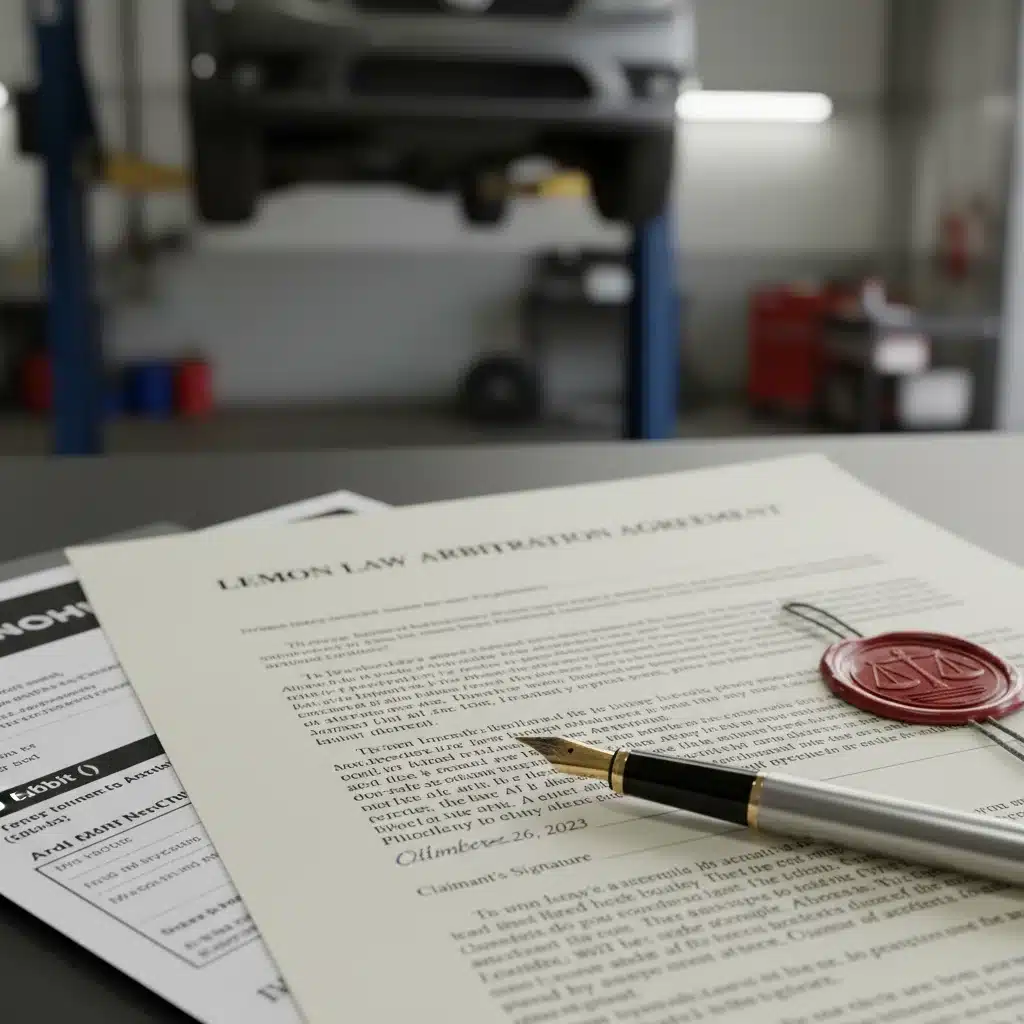
Navigating the Lemon Law Process: From Arbitration to Legal Action
Once you’ve met the criteria for a ‘lemon’ under your state’s law, the next phase involves pursuing a resolution. This typically involves a structured process that may include manufacturer arbitration programs and, if necessary, legal action. It’s a journey that can be complex, and understanding each step is vital.
Manufacturer’s Arbitration Programs
Many manufacturers offer informal dispute resolution programs, often referred to as arbitration. Some state Lemon Laws require consumers to go through these arbitration programs before they can file a lawsuit. These programs are designed to provide a quicker, less formal way to resolve disputes without going to court.
Pros:
- Cost-effective: Often free for the consumer.
- Faster resolution: Decisions are usually made within a few weeks.
- Less formal: Does not require extensive legal knowledge or court procedures.
Cons:
- Binding vs. Non-binding: Some arbitration decisions are binding, meaning you must accept the outcome. Others are non-binding, allowing you to pursue further legal action if you’re not satisfied. Always check the terms.
- Manufacturer-sponsored: While theoretically impartial, these programs are funded by manufacturers, which can raise concerns about bias.
- Limited scope: May not offer the full range of remedies available through court action.
If you choose to participate in an arbitration program, ensure you still have all your documentation in order. Present your case clearly and concisely, using your detailed records as evidence. The lemon law explained to you here highlights the importance of being prepared for this step.
Seeking Legal Counsel: When to Hire a Lemon Law Attorney
While some consumers successfully navigate the Lemon Law process on their own, hiring an experienced Lemon Law attorney can significantly increase your chances of a favorable outcome. Lemon Law cases can be complex, involving intricate legal arguments and negotiations with powerful manufacturers.
Reasons to hire an attorney:
- Expertise: Attorneys specialize in Lemon Law and understand the nuances of state and federal regulations.
- Negotiation power: They can effectively negotiate with manufacturers on your behalf, often achieving better settlements.
- Litigation: If arbitration fails or is not an option, an attorney can represent you in court.
- Cost: Many Lemon Law attorneys work on a contingency basis, meaning they only get paid if you win, and often, the manufacturer is responsible for covering your legal fees if you prevail.
A good attorney will review your documentation, assess the strength of your case, and guide you through every step of the process. They can help you understand whether your specific situation meets the criteria for a ‘lemon’ in your state and what remedies are realistically achievable. This expert guidance is invaluable when the lemon law explained in detail is required.
Potential Remedies: What You Can Expect from a Successful Lemon Law Claim
If your vehicle is determined to be a ‘lemon,’ state laws typically provide for one of two primary remedies: a vehicle replacement or a cash refund. The choice between these two often depends on consumer preference and negotiation, though specific state laws might prioritize one over the other or allow the manufacturer to choose.
Vehicle Replacement
A replacement vehicle means the manufacturer provides you with a new, comparable vehicle. This new vehicle should be identical or substantially equivalent to your original vehicle, including features, options, and trim level. When opting for a replacement, be aware of:
- Mileage offset: Most states allow the manufacturer to charge you a ‘reasonable use’ fee for the mileage you accumulated on the defective vehicle before the first repair attempt. This fee is calculated based on a formula defined in state law and is deducted from the value of the replacement.
- Comparable value: Ensure the replacement vehicle is truly comparable. Sometimes, due to model year changes or availability, an exact match isn’t possible, and negotiation might be needed to ensure you receive equivalent value.
- Transfer of warranty: The new vehicle should come with a new full manufacturer’s warranty.
Cash Refund (Buyback)
A cash refund, or buyback, means the manufacturer repurchases the defective vehicle from you. The refund amount typically includes:
- The full purchase price: This includes the base price of the vehicle, sales tax, license and registration fees, and any optional extras installed by the manufacturer or dealer.
- Collateral charges: This can include finance charges, rental car expenses, towing fees, and other incidental costs directly related to the defect.
- Mileage offset: Similar to a replacement, a ‘reasonable use’ deduction for the mileage accumulated on the vehicle before the first repair attempt will be applied.
The goal of a buyback is to put you back in the financial position you would have been in had you never purchased the defective vehicle. This is a crucial part of the lemon law explained to protect consumers.
Other Potential Damages
In some cases, and depending on state law, you might also be able to recover additional damages, such as attorney’s fees and court costs. This is particularly true if you are successful in a lawsuit. Some states also allow for punitive damages in cases where the manufacturer acted in bad faith, though these are rare.
Common Misconceptions and Important Considerations in 2026
Despite the existence of Lemon Laws for decades, many consumers still hold misconceptions or overlook crucial aspects that can impact their claim. Staying informed about these nuances is just as important as understanding the basic principles.
Misconception 1: The Lemon Law Only Applies to the Engine
Reality: While powertrain issues (engine, transmission) are common reasons for Lemon Law claims, the law applies to any substantial defect that impairs the vehicle’s use, value, or safety. This can include persistent electrical problems, significant brake issues, steering malfunctions, or even recurring water leaks that damage the interior and create unsafe driving conditions. The key is the ‘substantial’ nature of the defect.
Misconception 2: You Need to Drive the Car for a While Before it Becomes a ‘Lemon’
Reality: The opposite is often true. Most Lemon Laws have a ‘presumption period’ (e.g., 12,000 miles or 12-24 months) during which defects are more easily presumed to be manufacturing flaws. Issues that arise early in the vehicle’s life are typically stronger candidates for a Lemon Law claim. Don’t wait if you suspect a problem; address it immediately.
Misconception 3: The Dealership Is Responsible for Your Lemon Law Claim
Reality: While the dealership performs the repairs, the Lemon Law holds the manufacturer responsible for the defective vehicle. Dealerships are authorized service centers, but they don’t manufacture the car. Your claim is ultimately against the vehicle manufacturer, not the dealer who sold you the car. This distinction is vital for understanding the lemon law explained in practice.
Important Consideration: Used Cars and Lemon Laws
Generally, state Lemon Laws apply only to new vehicles. However, some states have ‘used car Lemon Laws’ or ‘warranty of merchantability’ laws that provide some protection for used car buyers. These are typically less comprehensive than new car Lemon Laws and have different criteria. Always check your state’s specific regulations if you bought a used car with significant issues.
Important Consideration: Leased Vehicles
Yes, Lemon Laws typically apply to leased new vehicles as well. If you are leasing a car that turns out to be a lemon, you generally have the same rights to a replacement vehicle or a refund of your lease payments (minus a reasonable use deduction). The process and remedies are similar to those for purchased vehicles.
The Future of Lemon Laws: What to Expect in 2026 and Beyond
As automotive technology advances at an unprecedented pace, with electric vehicles (EVs), autonomous driving features, and increasingly complex software systems, the landscape of Lemon Law claims is also evolving. While the core principles of consumer protection remain, new types of defects and challenges are emerging.
Electric Vehicles and Software Defects
With the rise of EVs, new categories of defects are becoming more prevalent. Battery degradation beyond expected norms, charging system malfunctions, and software glitches that affect performance or safety are increasingly leading to Lemon Law claims. These issues often require specialized diagnostic tools and expertise, sometimes leading to longer repair times.
Manufacturers are constantly updating vehicle software, and while over-the-air updates can fix some issues, persistent or critical software bugs can still qualify a vehicle as a lemon if they significantly impair its functionality or safety and cannot be resolved after repeated attempts. The lemon law explained will need to adapt to these technological shifts.
Autonomous Driving Features
As vehicles incorporate more advanced driver-assistance systems (ADAS) and move towards higher levels of autonomous driving, defects in these complex systems can pose significant safety risks. Malfunctioning sensors, erroneous warnings, or failures in autonomous braking or steering systems could easily qualify a vehicle as a lemon. Proving these intermittent electronic issues can be challenging but is crucial for a successful claim.
Increased Consumer Awareness and Digital Documentation
Consumers in 2026 are generally more aware of their rights, partly due to readily available information online. The ease of digital documentation (photos, videos, emails) also empowers consumers to build stronger cases. However, this also means manufacturers and their legal teams are more sophisticated in defending against claims, making expert legal representation even more important.
Potential Legislative Updates
While the core of Lemon Laws is robust, state legislatures may introduce updates to address new vehicle technologies, clarify definitions of ‘substantial defect’ in the context of software, or adjust ‘reasonable repair attempt’ criteria for complex electronic systems. Staying informed about any legislative changes in your state is always a good practice.
Conclusion: Empowering Yourself Against a Lemon
Discovering that your new car, purchased with high hopes, is a ‘lemon’ can be incredibly frustrating and financially draining. However, understanding the lemon law explained and acting proactively can empower you to seek appropriate recourse. Remember that these laws are designed to protect you, the consumer, from significant manufacturing defects that compromise your vehicle’s use, value, or safety.
The key takeaways for any new car owner in 2026 facing issues within 12,000 miles are:
- Document Everything: Meticulous record-keeping is your strongest asset.
- Communicate Effectively: Clearly articulate issues to the dealership and formally notify the manufacturer.
- Understand Your State’s Law: Be aware of the specific definitions of ‘substantial defect,’ ‘reasonable repair attempts,’ and the presumption period in your state.
- Consider Legal Counsel: An experienced Lemon Law attorney can provide invaluable guidance and representation, often at no upfront cost to you.
- Know Your Remedies: Be clear on whether you seek a replacement vehicle or a cash refund, and understand the implications of each.
Don’t let a defective vehicle diminish your investment or compromise your safety. By following these steps and leveraging the protections afforded by the Lemon Law, you can navigate this challenging situation effectively and ensure you get the reliable vehicle you paid for. Your peace of mind and financial well-being are worth fighting for.