Online Privacy Rights: What CCPA and Other Laws Mean for Your Data in 2026

Anúncios
Online Privacy Rights: What CCPA and Other Laws Mean for Your Data in 2026
In an increasingly digital world, our personal data is constantly being collected, processed, and shared. From browsing habits to purchasing patterns, every click and interaction leaves a digital footprint. As technology advances, so too does the need for robust protections governing how our information is handled. This growing awareness has led to a proliferation of online privacy laws designed to empower individuals and hold organizations accountable. Understanding your online privacy rights in 2026 is not just a matter of legal compliance for businesses, but a fundamental aspect of digital citizenship for individuals.
The landscape of data privacy is dynamic, with new regulations emerging and existing ones evolving. For anyone navigating the complexities of the internet, comprehending the implications of laws like the California Consumer Privacy Act (CCPA), the General Data Protection Regulation (GDPR), and other significant legal frameworks is paramount. These laws are not merely bureaucratic hurdles; they represent a significant shift in how personal data is valued and protected. They grant individuals unprecedented control over their information, moving away from a model where data collection was often opaque and unregulated.
Anúncios
This comprehensive guide will delve deep into the most influential online privacy laws impacting your data in 2026. We will explore their core principles, discuss their reach, and provide practical insights into what they mean for both consumers and businesses. By the end of this article, you will have a clearer understanding of your rights, the responsibilities of data handlers, and the future trajectory of data privacy.
The Foundation: Understanding Your Online Privacy Rights
Before we dissect specific legislation, it’s crucial to grasp the foundational principles behind online privacy rights. At its heart, data privacy is about control. It’s the right of individuals to determine who can access their personal information, how it’s used, and for what purposes. This concept has gained significant traction as the volume and sensitivity of data collected online have exploded.
Anúncios
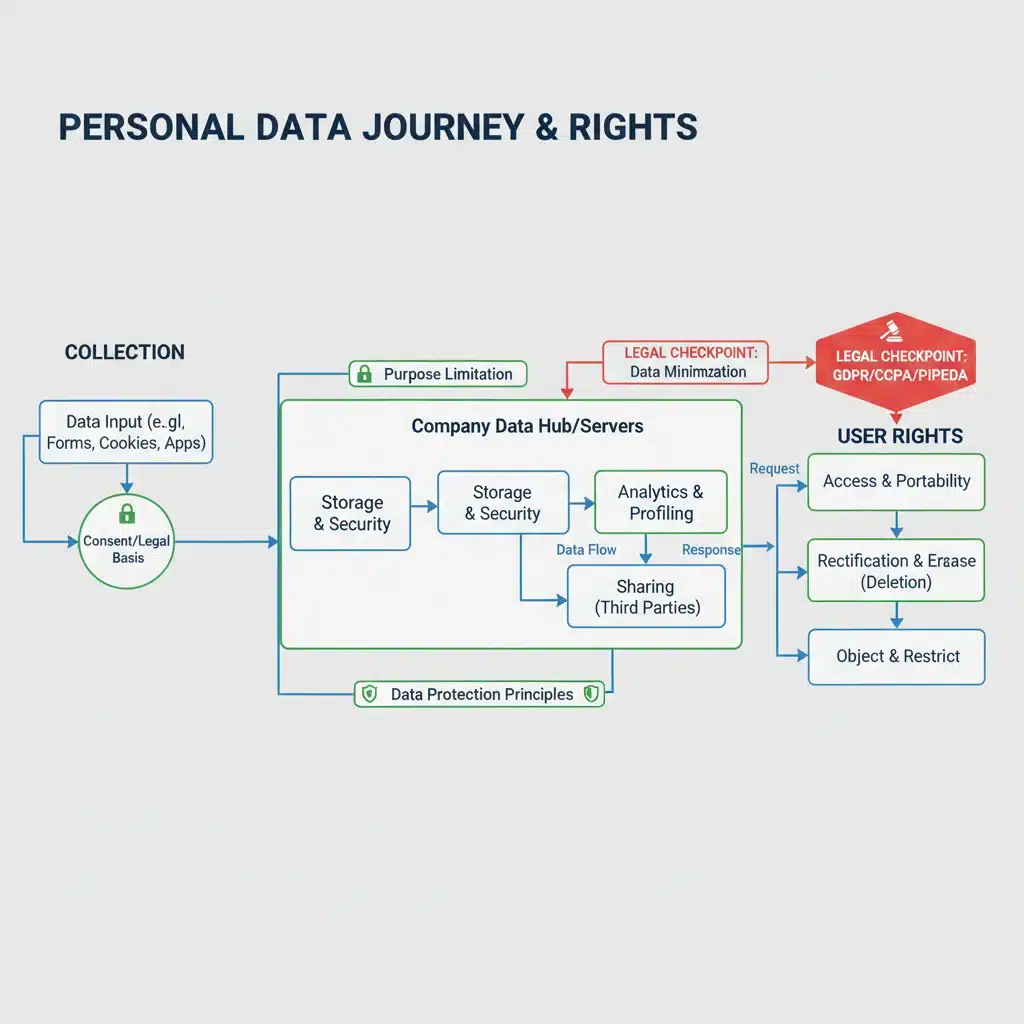
Key tenets of modern data privacy legislation often include:
- Right to Know: Consumers have the right to know what personal information is being collected about them, from what sources, the purpose for collecting it, and with whom it is shared.
- Right to Access: Individuals can request access to the specific pieces of personal information a business has collected about them.
- Right to Delete: The right to request the deletion of personal information collected from them, with certain exceptions.
- Right to Opt-Out: The right to opt-out of the sale or sharing of their personal information.
- Right to Non-Discrimination: Businesses cannot discriminate against consumers for exercising their privacy rights.
- Data Minimization: The principle that organizations should only collect the minimum amount of data necessary for a specific purpose.
- Purpose Limitation: Personal data should only be collected for specified, explicit, and legitimate purposes and not further processed in a manner that is incompatible with those purposes.
- Security: Organizations must implement appropriate security measures to protect personal data from unauthorized access, disclosure, alteration, or destruction.
These principles form the bedrock upon which various online privacy laws are built, aiming to create a more transparent and equitable digital environment. As we move into 2026, the enforcement and expansion of these rights will continue to shape how businesses operate and how individuals interact with online services.
CCPA and CPRA: California’s Pioneering Role in Data Protection
The California Consumer Privacy Act (CCPA), enacted in 2018 and effective in 2020, marked a significant milestone in U.S. data privacy. Often dubbed the "American GDPR," it grants California consumers extensive rights regarding their personal information. The CCPA’s influence extends far beyond California’s borders, as many businesses operating nationwide must comply due to their interactions with California residents. Its impact on online privacy laws is undeniable, setting a precedent for other states.
In 2020, California voters approved Proposition 24, which led to the creation of the California Privacy Rights Act (CPRA). The CPRA significantly amended and expanded the CCPA, taking full effect on January 1, 2023, with enforcement beginning July 1, 2023. By 2026, its provisions will be fully integrated into business practices.
Key enhancements under the CPRA include:
- New Category of "Sensitive Personal Information": This includes data revealing racial or ethnic origin, religious or philosophical beliefs, union membership, genetic data, biometric data, health information, sexual orientation, and precise geolocation. Consumers have the right to limit the use and disclosure of this sensitive information.
- Creation of the California Privacy Protection Agency (CPPA): This new agency is dedicated to enforcing and implementing California’s privacy laws, giving the state’s privacy regulations a dedicated regulatory body similar to those found in Europe.
- Expanded Right to Correction: Consumers now have the right to correct inaccurate personal information.
- Expanded Right to Opt-Out of Sharing: The right to opt-out now explicitly includes "sharing" personal information for cross-context behavioral advertising, not just "selling."
- Data Minimization and Purpose Limitation: Businesses are required to collect, use, retain, and share consumer personal information only as "reasonably necessary and proportionate" to achieve the purposes for which the information was collected or processed.
The CCPA, as amended by the CPRA, fundamentally reshapes how businesses collect, use, and share personal data. Its broad scope and robust enforcement mechanisms make it a critical piece of the online privacy laws puzzle for any entity dealing with U.S. consumer data.
GDPR: The Global Standard for Data Protection
The General Data Protection Regulation (GDPR), implemented by the European Union in May 2018, is arguably the most influential data privacy law globally. Its far-reaching nature means that any organization, anywhere in the world, that processes the personal data of EU residents must comply. This extraterritorial scope has made GDPR a de facto global standard, influencing the development of online privacy laws in countless other jurisdictions, including the CCPA.
The GDPR is built on seven key principles:
- Lawfulness, Fairness, and Transparency: Personal data must be processed lawfully, fairly, and in a transparent manner.
- Purpose Limitation: Data collected for specified, explicit, and legitimate purposes and not further processed in a manner incompatible with those purposes.
- Data Minimization: Data collected should be adequate, relevant, and limited to what is necessary.
- Accuracy: Personal data must be accurate and, where necessary, kept up to date.
- Storage Limitation: Data should be kept for no longer than is necessary for the purposes for which it is processed.
- Integrity and Confidentiality (Security): Personal data must be processed in a manner that ensures appropriate security, including protection against unauthorized or unlawful processing and against accidental loss, destruction, or damage, using appropriate technical or organizational measures.
- Accountability: The data controller is responsible for and must be able to demonstrate compliance with the other principles.
For individuals, GDPR grants a comprehensive set of rights, including the right to access, rectification, erasure (the ‘right to be forgotten’), restriction of processing, data portability, objection, and rights in relation to automated decision-making and profiling. These rights empower individuals to have significant control over their digital footprint.
For businesses, GDPR mandates strict requirements for data handling, including obtaining explicit consent, implementing robust security measures, conducting Data Protection Impact Assessments (DPIAs), and appointing Data Protection Officers (DPOs) in certain circumstances. Non-compliance can lead to hefty fines, up to 4% of annual global turnover or €20 million, whichever is greater. As we approach 2026, GDPR continues to be a benchmark for online privacy laws worldwide, with its principles deeply embedded in international data transfer agreements and corporate privacy policies.
Beyond CCPA and GDPR: A Patchwork of Global Privacy Laws in 2026
While CCPA and GDPR are prominent, they are by no means the only players in the arena of online privacy laws. Many other jurisdictions have enacted or are in the process of enacting their own comprehensive data protection legislation, creating a complex and often challenging compliance landscape for businesses operating globally. By 2026, this patchwork is expected to be even more intricate.
Key International and U.S. State Laws:
- Brazil’s Lei Geral de Proteção de Dados (LGPD): Effective since 2020, LGPD is heavily inspired by GDPR and grants Brazilian citizens similar rights regarding their personal data, including access, correction, deletion, and the right to object to processing.
- Canada’s Personal Information Protection and Electronic Documents Act (PIPEDA): PIPEDA governs how private sector organizations collect, use, and disclose personal information in commercial activities. It is currently undergoing significant modernization efforts to align more closely with global standards.
- Virginia Consumer Data Protection Act (VCDPA): Effective January 1, 2023, VCDPA grants Virginia residents rights similar to those under CCPA and GDPR, including rights to access, delete, correct, and opt-out of the sale of personal data.
- Colorado Privacy Act (CPA): Also effective January 1, 2023, the CPA provides Colorado consumers with comparable rights and imposes obligations on businesses. It includes specific provisions for sensitive data and universal opt-out mechanisms.
- Utah Consumer Privacy Act (UCPA): Effective December 31, 2023, the UCPA is generally seen as more business-friendly than CCPA, VCDPA, or CPA, offering similar rights but with some differences in scope and enforcement.
- Connecticut Data Privacy Act (CTDPA): Effective July 1, 2023, CTDPA largely mirrors the VCDPA and CPA, providing Connecticut residents with robust data privacy rights.
- China’s Personal Information Protection Law (PIPL): Enacted in November 2021, PIPL is one of the world’s strictest data protection laws. It imposes stringent requirements on the collection, processing, and transfer of personal information, especially cross-border transfers.
The proliferation of these laws means that businesses must adopt a holistic approach to data privacy, often striving for compliance with the strictest applicable regulation to ensure global readiness. For individuals, it means an increasing recognition of their data rights, regardless of their geographical location.

The Impact on Businesses: Adapting to Evolving Online Privacy Laws
For businesses, navigating the complex web of online privacy laws is a significant undertaking. Compliance is no longer an option but a necessity, with non-compliance carrying substantial financial and reputational risks. By 2026, organizations are expected to have robust privacy programs in place, demonstrating accountability and transparency.
Key Business Implications:
- Data Mapping and Inventory: Businesses must know what personal data they collect, where it’s stored, how it’s used, and with whom it’s shared. This often requires comprehensive data mapping exercises.
- Consent Management: Obtaining and managing consent for data collection and processing is critical. Consent mechanisms must be clear, unambiguous, and easily revocable.
- Privacy by Design: Integrating privacy considerations into the design and operation of all systems, services, and business practices from the outset, rather than as an afterthought.
- Data Subject Request (DSR) Fulfillment: Establishing efficient processes to handle requests from individuals exercising their privacy rights (e.g., access, deletion, correction requests) within specified timeframes.
- Vendor Management: Ensuring that third-party vendors and service providers who process personal data on behalf of the business also comply with applicable privacy laws. This often involves detailed data processing agreements.
- Data Security: Implementing and maintaining appropriate technical and organizational measures to protect personal data from breaches and unauthorized access.
- Cross-Border Data Transfers: Adhering to strict rules and mechanisms for transferring personal data across international borders, especially between jurisdictions with different privacy standards (e.g., EU-U.S. data transfers).
- Transparency and Privacy Policies: Providing clear, concise, and easily accessible privacy policies that inform users about data practices in plain language.
- Regular Audits and Training: Conducting periodic privacy audits and providing ongoing training to employees on data protection best practices.
The shift towards greater data governance requires a fundamental change in corporate culture. Businesses that proactively embrace these changes will not only mitigate risks but also build greater trust with their customers, which can be a significant competitive advantage in the digital age. The evolution of online privacy laws means continuous adaptation and investment in privacy infrastructure.
What These Laws Mean for You as a Consumer in 2026
For individuals, the growing body of online privacy laws represents a powerful toolkit for reclaiming control over your digital life. While the legal jargon can be daunting, understanding your basic rights is the first step towards exercising them effectively. By 2026, these rights are expected to be more widely recognized and easier to exercise.
How to Exercise Your Online Privacy Rights:
- Read Privacy Policies (Carefully): While often lengthy, privacy policies are legally binding documents that outline how your data is handled. Look for clear statements on data collection, use, and sharing.
- Utilize Opt-Out Options: Many websites and services offer "Do Not Sell My Personal Information" links (especially under CCPA/CPRA) or cookie consent banners that allow you to manage your preferences. Make use of these.
- Submit Data Subject Requests: If you’s a resident of a jurisdiction covered by CCPA, GDPR, or similar laws, you can formally request access to your data, its deletion, or correction. Look for dedicated privacy portals or contact information in privacy policies.
- Manage Your Browser and Device Settings: Your web browser, smartphone, and other devices have privacy settings that can limit tracking, location sharing, and ad personalization. Regularly review and adjust these.
- Use Privacy-Enhancing Technologies: Consider using VPNs (Virtual Private Networks), privacy-focused browsers, and ad blockers to reduce your digital footprint.
- Be Mindful of What You Share: Every piece of information you share online, especially on social media, can be collected and used. Practice discretion and understand the privacy settings of platforms you use.
- Stay Informed: The landscape of online privacy laws is constantly evolving. Keep yourself updated on new regulations and changes to existing ones.
Empowerment through knowledge is key. The more you understand your rights and the mechanisms available to enforce them, the better equipped you will be to protect your personal information in the digital sphere. By 2026, it’s expected that more user-friendly tools and standardized processes will emerge to help individuals exercise these rights more seamlessly.
The Future of Online Privacy Laws: Trends and Predictions for 2026 and Beyond
The journey of online privacy laws is far from over. As technology continues to innovate, regulators will face new challenges in protecting personal data. Several trends and predictions are likely to shape the future of data privacy beyond 2026:
- Increased Harmonization (and Fragmentation): While there’s a global push for similar privacy principles, the reality is a mix of harmonization (as seen with GDPR’s influence) and continued fragmentation, with each jurisdiction adding its unique nuances. Businesses will continue to grapple with this "patchwork" effect.
- Focus on AI and Automated Decision-Making: The rise of artificial intelligence brings new privacy concerns, particularly around how AI systems use personal data for profiling, decision-making, and even generating new content. Future laws will likely address explainability, fairness, and transparency in AI.
- Data Localization and Sovereignty: Some countries are increasingly advocating for data localization – requiring personal data to be stored and processed within their borders. This trend could complicate cross-border data flows and global business operations.
- Enhanced Enforcement and Fines: Regulatory bodies worldwide are becoming more active in enforcing privacy laws, leading to higher fines and more frequent audits. This trend will likely continue, underscoring the importance of robust compliance.
- Privacy-Enhancing Technologies (PETs): The development and adoption of PETs, such as differential privacy, homomorphic encryption, and federated learning, will play a crucial role in enabling data utilization while preserving privacy. Regulators may increasingly encourage or mandate their use.
- Children’s Privacy: Expect a continued focus on protecting the privacy of minors online, with stricter rules for platforms and services targeting children or likely to be accessed by them.
- Biometric Data and Health Information: As biometric technologies (e.g., facial recognition, fingerprint scans) become more common, and digital health records proliferate, expect more specific regulations governing these highly sensitive data types.
- Universal Opt-Out Mechanisms: There’s a growing call for universal opt-out mechanisms (like global privacy controls) that allow users to signal their privacy preferences once, across multiple websites and services, simplifying the process of exercising rights.
The future of online privacy laws will be characterized by a continuous dance between technological advancement and regulatory response. Both individuals and organizations must remain vigilant and adaptable to navigate this evolving landscape effectively.
Conclusion: Navigating Your Digital Future with Confidence
The digital world of 2026 is one where online privacy laws are more prevalent and powerful than ever before. From the foundational principles of control and transparency to the specific mandates of CCPA, GDPR, and a growing list of global regulations, the legal framework for data protection is becoming increasingly robust. This is a positive development for individuals, offering greater assurance that their personal information is treated with respect and accountability.
For businesses, the challenge of compliance is ongoing, requiring significant investment in privacy infrastructure, transparent practices, and a culture that prioritizes data protection. However, embracing these challenges can lead to enhanced trust, stronger customer relationships, and a more sustainable digital presence.
As a consumer, understanding your online privacy rights is your superpower. By being informed, vigilant, and proactive in exercising these rights, you can navigate the complexities of the internet with greater confidence and security. The conversation around data privacy will undoubtedly continue to evolve, but the trajectory is clear: a future where individual control over personal data is not just an aspiration, but a legally protected reality.
Stay informed, stay secure, and take charge of your digital destiny in 2026 and beyond.
Autor