ACA Subsidies 2026: Maximize Your Health Insurance Savings

Anúncios
The landscape of healthcare in the United States is constantly evolving, and a critical component of this evolution is the Affordable Care Act (ACA). As we look towards 2026, understanding the nuances of ACA subsidies 2026 becomes paramount for millions of Americans seeking affordable health insurance. These subsidies, primarily in the form of premium tax credits, are designed to reduce the cost of health insurance premiums for eligible individuals and families, making quality healthcare accessible to a broader population. With an estimated 15 million Americans potentially benefiting from these savings, delving into the specifics of the ACA subsidies 2026 is not just informative, but essential for financial well-being and health security.
Anúncios
The ACA, signed into law in 2010, aimed to expand health insurance coverage, control healthcare costs, and improve healthcare quality. A cornerstone of this act is the provision of financial assistance to help individuals and families afford coverage purchased through the Health Insurance Marketplace. While the core principles remain, the specific parameters and eligibility criteria for ACA subsidies 2026 are influenced by ongoing legislative adjustments and economic factors. This comprehensive guide will break down what you need to know about these subsidies, how they are calculated, who qualifies, and how you can ensure you’re maximizing your savings.
What Are ACA Subsidies and Why Are They Important for 2026?
At its core, an ACA subsidy is financial assistance from the government that helps eligible individuals and families pay for health insurance premiums and, in some cases, out-of-pocket costs like deductibles, copayments, and co-insurance. The two main types of subsidies are:
Anúncios
- Premium Tax Credits (PTCs): These are the most common type of subsidy. They reduce the amount you pay each month for your health insurance premium. You can choose to have these credits paid directly to your insurance company, lowering your monthly bill, or claim them when you file your federal income tax return.
- Cost-Sharing Reductions (CSRs): These subsidies lower the amount you have to pay for deductibles, copayments, and co-insurance when you receive medical care. CSRs are only available if you enroll in a Silver-level plan on the Marketplace.
The importance of ACA subsidies 2026 cannot be overstated. Without these subsidies, health insurance premiums could be prohibitively expensive for many, leading to a lack of coverage and significant financial risk in case of illness or injury. For 2026, these subsidies continue to play a vital role in making healthcare affordable, especially for low- and middle-income households. They ensure that individuals and families can access comprehensive health plans that cover essential health benefits, from preventive care to prescription drugs and emergency services.
The Evolution of ACA Subsidies Leading to 2026
The structure of ACA subsidies has seen significant changes since the act’s inception. Notably, the American Rescue Plan Act (ARPA) of 2021 and the Inflation Reduction Act (IRA) of 2022 significantly enhanced these subsidies. These enhancements temporarily eliminated the income cap for subsidy eligibility (previously 400% of the federal poverty level, or FPL) and ensured that no one paid more than 8.5% of their household income for a benchmark Silver plan. These enhanced subsidies were initially set to expire, but the IRA extended them through 2025. As we approach 2026, there is ongoing discussion and potential for further legislative action regarding the continuation or modification of these enhanced subsidies. Therefore, staying informed about the latest developments will be crucial for understanding the exact parameters of ACA subsidies 2026.
Who Qualifies for ACA Subsidies in 2026?
Eligibility for ACA subsidies 2026 primarily hinges on your household income, household size, and whether you have access to affordable employer-sponsored coverage or other government programs like Medicare or Medicaid.
Income Requirements
Historically, premium tax credits were available to individuals and families with household incomes between 100% and 400% of the Federal Poverty Level (FPL). However, the enhanced subsidies extended by the IRA through 2025 removed the upper income limit, meaning even those above 400% FPL could qualify if their benchmark plan premiums exceeded 8.5% of their income. For ACA subsidies 2026, the continuation of this enhancement is a key factor to watch. If the enhancements are made permanent or extended, more people will continue to be eligible for assistance. If they revert to pre-ARPA rules, the 400% FPL cap would return. It’s important to note that the FPL is updated annually, so the specific income thresholds for 2026 will be released closer to the enrollment period.
For context, here’s a general idea of FPL levels (these are for 2023, for example, and will be updated for 2026):
- 100% FPL: For an individual, roughly $14,580; for a family of four, roughly $30,000.
- 400% FPL: For an individual, roughly $58,320; for a family of four, roughly $120,000.
If your income is below 100% FPL, you may qualify for Medicaid in states that have expanded their programs. If your state has not expanded Medicaid, you might fall into the ‘coverage gap,’ where you don’t qualify for Medicaid or ACA subsidies.
Other Eligibility Criteria for ACA Subsidies 2026
- Not Offered Affordable Employer Coverage: You generally won’t qualify for ACA subsidies if you have access to ‘affordable’ health coverage through your employer or a family member’s employer. Employer-sponsored coverage is considered affordable if the employee’s share of the premium for self-only coverage is less than a certain percentage of your household income (this percentage is adjusted annually).
- Not Eligible for Other Government Programs: You must not be eligible for Medicare, Medicaid, CHIP (Children’s Health Insurance Program), or TRICARE.
- Lawful Presence: You must be a U.S. citizen or lawfully present immigrant.
- File Taxes Jointly (if married): If you are married, you typically must file a joint tax return to be eligible for subsidies.
How Are ACA Subsidies Calculated for 2026?
The calculation of ACA subsidies 2026, specifically premium tax credits, is a bit complex but follows a clear methodology based on your income relative to the FPL and the cost of the benchmark plan in your area.
The Benchmark Plan
The subsidy amount is determined by the cost of the second-lowest-cost Silver plan available in your area through the Health Insurance Marketplace. This is known as the ‘benchmark plan.’ Your subsidy will ensure that the premium for this benchmark plan does not exceed a certain percentage of your household income.
Premium Contribution Limits
The percentage of income you are expected to contribute towards the benchmark plan premium varies based on your income level relative to the FPL. With the enhanced subsidies extended through 2025, these percentages were significantly reduced, and the 8.5% cap for those above 400% FPL was introduced. If these enhancements continue into 2026, the structure will remain favorable. If they expire, the pre-ARPA contribution percentages would return, which were higher across all income brackets. The subsidy amount is the difference between the actual premium of the benchmark plan and your maximum expected contribution.
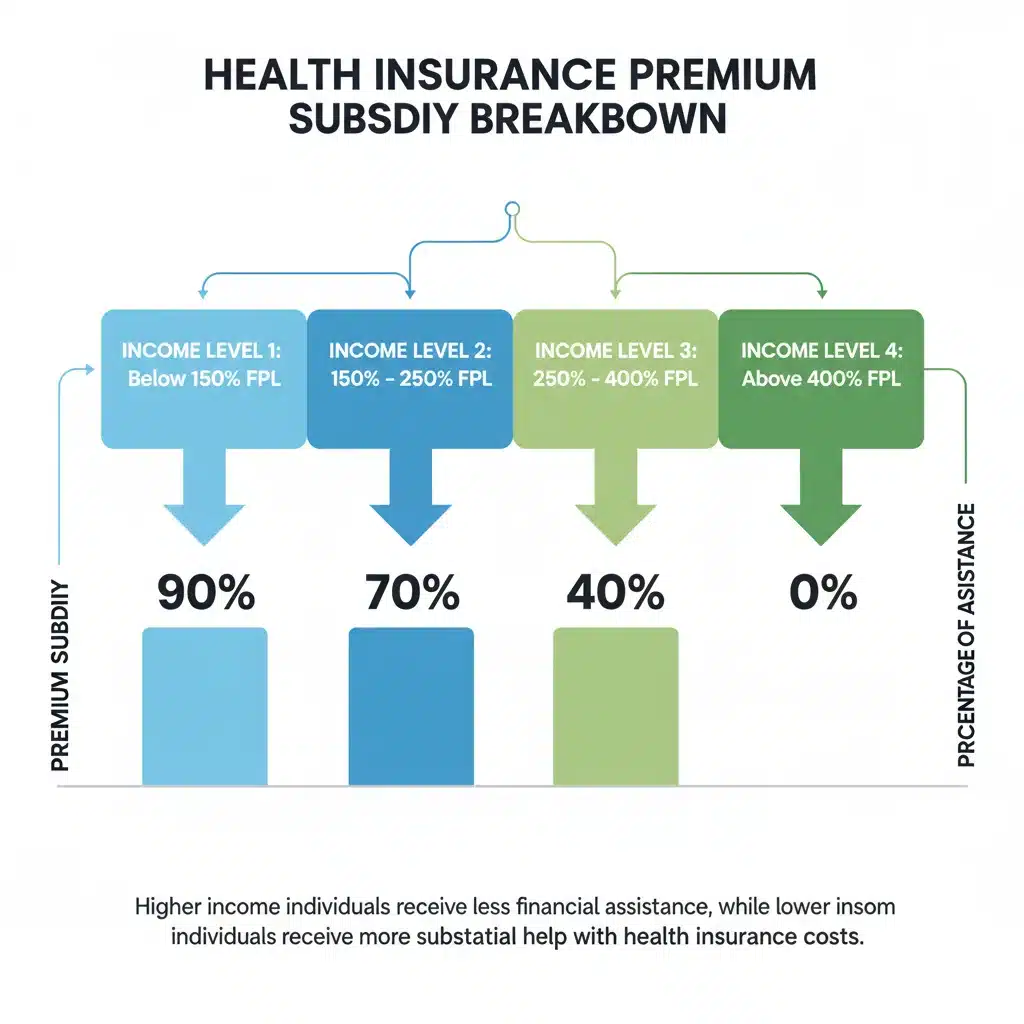
Example Calculation (assuming enhanced subsidies continue for 2026):
Let’s consider a hypothetical family of four with an annual household income of $60,000 (approximately 200% FPL for 2023, adjusted for 2026). Suppose the benchmark Silver plan in their area costs $1,500 per month.
- Under enhanced subsidy rules, a family at 200% FPL might be expected to pay around 2-4% of their income for the benchmark plan. Let’s assume it’s 3%.
- Expected annual contribution: $60,000 * 0.03 = $1,800.
- Expected monthly contribution: $1,800 / 12 = $150.
- Benchmark plan cost: $1,500 per month.
- Monthly subsidy: $1,500 (benchmark cost) – $150 (expected contribution) = $1,350.
This family would receive a $1,350 monthly premium tax credit, significantly reducing their healthcare costs. They could then use this $1,350 to pay for any Marketplace plan, not just the benchmark plan. If they choose a plan costing less than $1,500, they would pay even less out-of-pocket. If they choose a more expensive plan, they would pay the difference.
Cost-Sharing Reductions (CSRs)
For those with incomes up to 250% FPL, Cost-Sharing Reductions are available if they enroll in a Silver plan. These reductions lower your deductibles, copayments, and out-of-pocket maximums. The lower your income, the greater the CSRs you receive. These are automatically applied to eligible Silver plans when you enroll, you don’t need to apply for them separately.
How to Apply for ACA Subsidies in 2026
Applying for ACA subsidies 2026 is an integral part of enrolling in health insurance through the Marketplace. The process is designed to be straightforward, but careful attention to detail is crucial.
The Open Enrollment Period
The primary time to apply for health insurance and subsidies is during the annual Open Enrollment Period. This typically runs from November 1st to January 15th for coverage beginning the following year. For 2026 coverage, you would apply during the Open Enrollment Period in late 2025. Missing this window means you generally cannot enroll unless you qualify for a Special Enrollment Period (SEP).
Steps to Apply:
- Visit HealthCare.gov or Your State Marketplace: Most states use the federal HealthCare.gov website. However, some states operate their own state-based marketplaces (e.g., California’s Covered California, New York State of Health). You’ll need to create an account if you don’t already have one.
- Provide Household and Income Information: The application will ask for details about your household members, their ages, and your estimated household income for 2026. This is where accuracy is vital. Use your best estimate of your income for the year you need coverage, as this directly impacts your subsidy amount.
- Consent to Verification: The Marketplace will use your information to verify your eligibility for subsidies and other programs (like Medicaid). This often involves checking tax records and other databases.
- Receive Eligibility Determination: After submitting your application, you’ll receive an eligibility determination, which will tell you if you qualify for premium tax credits and/or cost-sharing reductions, and the estimated amount.
- Compare Plans and Enroll: Once you know your subsidy amount, you can compare available health plans in your area. The Marketplace website allows you to filter plans by metal level (Bronze, Silver, Gold, Platinum), provider network, and other features. The subsidy amount will be displayed, showing you your reduced monthly premium.
- Select a Plan and Enroll: Choose the plan that best fits your needs and budget, and complete the enrollment process.

What to Do If Your Income Changes
It is crucial to update your Marketplace application if your income or household size changes during the year. If your income increases and you don’t report it, you might receive too much in subsidies and have to pay some back at tax time. Conversely, if your income decreases, you might be eligible for more assistance, and updating your information can lower your monthly premiums immediately.
Maximizing Your Savings with ACA Subsidies 2026
Beyond simply applying, there are strategies you can employ to ensure you’re getting the most out of the ACA subsidies 2026.
Accurate Income Estimation
Your estimated household income is the single most critical factor in determining your subsidy amount. Take time to accurately project your income for 2026. Consider all sources of taxable income, including wages, self-employment income, unemployment benefits, Social Security benefits (in some cases), and capital gains. If you expect significant changes, update your application promptly.
Choosing the Right Metal Level
- Silver Plans and CSRs: If you qualify for Cost-Sharing Reductions (CSRs), you must choose a Silver plan to receive them. CSRs significantly reduce your out-of-pocket costs, making Silver plans a highly attractive option for eligible individuals, often more valuable than a Gold plan for the same or lower premium after subsidies.
- Bronze Plans: These plans have the lowest monthly premiums but the highest deductibles and out-of-pocket maximums. They might be suitable if you rarely use healthcare services and want to save on monthly costs, but be prepared for higher costs if you need care.
- Gold and Platinum Plans: These plans have higher monthly premiums but lower deductibles and out-of-pocket maximums. They are suitable if you anticipate frequent medical care or have ongoing health conditions.
Understanding Your Tax Implications
Premium tax credits are reconciled when you file your federal income tax return. If you received too much subsidy based on your actual income, you might have to repay some. If you received too little, you’ll get the difference as a refund. Filing Form 8962, Premium Tax Credit (PTC), is necessary to reconcile your advanced premium tax credits. Accurate income reporting throughout the year helps prevent surprises at tax time.
Seeking Assistance
If you find the process confusing, don’t hesitate to seek help. The Health Insurance Marketplace offers free assistance from navigators, assisters, and certified agents/brokers. These professionals can help you understand your options, estimate your income, and complete the application process for ACA subsidies 2026.
Potential Changes and What to Watch for in 2026
As mentioned, the enhanced subsidies provided by ARPA and IRA are currently set to expire at the end of 2025. This means that without further legislative action, the rules for ACA subsidies 2026 could revert to pre-ARPA levels. This would have several significant implications:
- Reinstatement of the 400% FPL Income Cap: Millions of Americans whose incomes are above 400% FPL but still struggle with healthcare costs would lose their eligibility for premium tax credits.
- Higher Premium Contribution Percentages: Even those below 400% FPL would likely see an increase in the percentage of their income they are expected to contribute towards their benchmark plan, leading to higher out-of-pocket premium costs.
- Potential for Increased Uninsured Rates: Higher costs could force some individuals to drop coverage, leading to an increase in the uninsured population.
However, there is strong political will among many lawmakers to extend or make permanent the enhanced subsidies. It is highly advisable to stay informed about legislative developments throughout 2025 and leading up to the 2026 Open Enrollment Period. Official sources like HealthCare.gov, the Department of Health and Human Services, and reputable news outlets will provide the most up-to-date information on the status of ACA subsidies 2026.
Understanding Essential Health Benefits (EHBs)
Regardless of the subsidy level, all plans offered through the Health Insurance Marketplace must cover a set of ten categories of Essential Health Benefits (EHBs). This ensures that even with subsidies, you’re getting comprehensive coverage. These categories include:
- Ambulatory patient services (outpatient care you get without being admitted to a hospital)
- Emergency services
- Hospitalization (like surgery and overnight stays)
- Maternity and newborn care (care before and after your baby is born)
- Mental health and substance use disorder services, including behavioral health treatment (this includes counseling and psychotherapy)
- Prescription drugs
- Rehabilitative and habilitative services and devices (services and devices to help people with injuries, disabilities, or chronic conditions gain or recover mental and physical skills)
- Laboratory services
- Preventive and wellness services and chronic disease management
- Pediatric services, including oral and vision care (but adult dental and vision coverage aren’t essential health benefits)
Knowing that your subsidized plan covers these fundamental services provides peace of mind and ensures that the financial assistance truly translates into access to necessary care.
Common Misconceptions About ACA Subsidies
Dispelling common myths can help individuals better understand and utilize ACA subsidies 2026:
- Myth: Subsidies are only for very low-income individuals. While lower incomes receive larger subsidies, the enhanced subsidies have made assistance available to many middle-income families, especially in areas with high healthcare costs.
- Myth: Receiving a subsidy means you’re getting ‘free’ healthcare. Subsidies reduce the cost, but individuals still pay a portion of their premium and typically have out-of-pocket costs (deductibles, copayments) unless they qualify for very generous CSRs.
- Myth: Applying for a subsidy is too complicated. While it requires accurate information, the application process is streamlined, and free assistance is readily available.
- Myth: Subsidies are a loan that must be repaid. This is incorrect for the premium tax credit. As long as your estimated income is accurate and reconciled at tax time, it’s a credit, not a loan. However, if your income changes significantly and you don’t report it, you might have to repay a portion of the advanced credits.
The Broader Impact of ACA Subsidies
The continued availability of ACA subsidies 2026 has far-reaching implications beyond individual savings. They contribute to a more stable health insurance market by encouraging broader participation, which helps spread risk across a larger pool of insured individuals. This can lead to more competitive premiums overall. Furthermore, by reducing the financial barrier to health insurance, subsidies promote earlier access to preventive care and treatment for chronic conditions, potentially leading to a healthier population and reduced emergency room visits for preventable conditions.
For small businesses, the ACA also offers tax credits to help them provide coverage to their employees. While separate from individual subsidies, this demonstrates the broader commitment of the ACA to making healthcare more accessible across various sectors of the economy.
Conclusion: Preparing for ACA Subsidies in 2026
As 2026 approaches, the availability and structure of ACA subsidies 2026 will continue to be a critical topic for millions of Americans. These subsidies are a cornerstone of affordable healthcare, enabling individuals and families to secure vital health insurance coverage that protects their health and financial stability.
To ensure you maximize your potential savings, begin by understanding the eligibility requirements, accurately estimating your income, and familiarizing yourself with the application process through HealthCare.gov or your state’s Marketplace. Pay close attention to legislative updates regarding the continuation of enhanced subsidies, as these will directly impact how much financial assistance is available. By taking these proactive steps, you can confidently navigate the health insurance landscape for 2026 and secure the affordable, quality healthcare coverage you and your family deserve.
Don’t wait until the last minute. Start gathering your income information, research plans available in your area, and consider seeking expert assistance if needed. The promise of affordable healthcare through ACA subsidies 2026 is within reach for millions, and with the right preparation, you can be among those who benefit significantly.
Autor