2026 SNAP Benefits: Eligibility, Changes & Potential 5% Increase
Anúncios
The 2026 Food Stamp (SNAP) Benefit Changes: A Data-Backed Comparison of New Eligibility Requirements and Potential 5% Increase in Allotments
As we navigate the complexities of economic shifts and evolving social welfare programs, understanding the future of critical assistance like the Supplemental Nutrition Assistance Program (SNAP), commonly known as food stamps, becomes paramount. For millions of Americans, SNAP benefits are a lifeline, ensuring access to nutritious food and providing a crucial safety net. The year 2026 is poised to bring significant adjustments to the program, with discussions centering on both new eligibility requirements and a potential 5% increase in allotments. This comprehensive article delves into these anticipated changes, offering a data-backed comparison and shedding light on what recipients and stakeholders can expect from the 2026 SNAP benefits landscape.
Anúncios
The landscape of federal assistance programs is constantly under review, influenced by economic indicators, legislative priorities, and the ongoing effort to balance support for vulnerable populations with fiscal responsibility. The projected changes for 2026 SNAP benefits are not merely bureaucratic tweaks; they represent a potential reshaping of how food assistance is delivered, who qualifies, and the level of support provided. Our goal here is to cut through the speculation and provide a clear, evidence-based analysis of the proposed modifications.
Understanding the Current SNAP Framework: A Baseline for Comparison
Before we can fully appreciate the impact of the 2026 SNAP benefits changes, it’s essential to establish a clear understanding of the program’s current structure. SNAP is a federal program administered by the U.S. Department of Agriculture (USDA) that provides food assistance to low-income individuals and families. Eligibility is primarily determined by income and asset limits, with specific criteria varying slightly by state, though federal guidelines provide the overarching framework.
Anúncios
Current Eligibility Requirements: Who Qualifies Today?
- Gross Monthly Income: Generally, a household’s gross monthly income must be at or below 130% of the federal poverty level (FPL). For example, in 2023, for a family of three, this might be around $2,495 per month.
- Net Monthly Income: A household’s net monthly income (gross income minus certain deductions) must be at or below 100% of the FPL.
- Asset Limits: Most households must have $2,750 or less in countable resources, such as bank accounts. Households with at least one member aged 60 or older, or a member with a disability, may have a higher asset limit of $4,250.
- Work Requirements: Able-bodied adults without dependents (ABAWDs) typically face work requirements, needing to work or participate in a work program for at least 20 hours per week to maintain eligibility, though exemptions exist.
- Citizenship/Residency: Most recipients must be U.S. citizens or qualified non-citizens.
These criteria are designed to target assistance to those most in need, ensuring that the program serves its intended purpose of alleviating food insecurity. However, critics and proponents alike often debate the effectiveness and reach of these current rules, setting the stage for potential modifications in the future.
Current Benefit Allotments: How Much Do Recipients Receive?
SNAP benefits are calculated based on a household’s size, income, and certain expenses. The maximum benefit amount is tied to the Thrifty Food Plan (TFP), a low-cost model developed by the USDA that represents a nutritious diet at minimal cost. The TFP is updated annually, leading to adjustments in maximum benefit allotments. For instance, a single individual might receive a maximum of around $281 per month, while a family of four could receive up to approximately $939, depending on the year and specific calculations.
These figures serve as the baseline against which any proposed 5% increase for 2026 SNAP benefits will be measured. Understanding the current system is critical for a meaningful analysis of the changes to come.
Anticipated Changes to 2026 SNAP Benefits: Eligibility Requirements
The discussions surrounding 2026 SNAP benefits indicate a potential shift in eligibility parameters. While specific legislative text is still being finalized, several key areas are emerging as focal points for reform. These changes aim to either broaden the program’s reach, tighten its requirements, or streamline its administration.
Potential Adjustments to Income Thresholds
One of the most impactful changes could involve modifications to the gross and net monthly income thresholds. There are ongoing debates about whether these thresholds adequately capture the economic realities of low-income families, especially in areas with a high cost of living. Some proposals suggest increasing the FPL percentages to allow more working-poor families to qualify, recognizing that even with full-time employment, many struggle to afford basic necessities.
- Scenario 1: Increased FPL Percentage: A hypothetical increase from 130% to 150% of FPL for gross income could bring a significant number of new households into the program, particularly those on the cusp of eligibility who are still experiencing food insecurity. Data suggests that a substantial portion of food-insecure households currently earn just above the existing SNAP thresholds.
- Scenario 2: Regional Adjustments: Another possibility is the introduction of regional adjustments to income thresholds, acknowledging the vast differences in living costs across states and even within states. This would move away from a one-size-fits-all federal standard, potentially making 2026 SNAP benefits more responsive to local economic conditions.
Revisions to Asset Limits
Asset limits have long been a contentious point within SNAP. Critics argue that the current limits discourage savings and penalize households that attempt to build a small financial cushion for emergencies. Proposals for 2026 SNAP benefits might include:
- Higher General Asset Limits: An increase in the general asset limit (currently $2,750) could allow more families to retain a modest savings account or a reliable vehicle without losing eligibility. This change would reflect a more modern understanding of financial stability for low-income households.
- Exclusion of Retirement Accounts: There’s a strong push to exclude certain retirement savings accounts (like 401ks or IRAs) from countable assets, similar to how they are treated in other assistance programs. This would encourage long-term financial planning without jeopardizing immediate food assistance.
Modifications to Work Requirements for ABAWDs
Work requirements for Able-Bodied Adults Without Dependents (ABAWDs) are frequently debated. While some argue for stricter enforcement to encourage self-sufficiency, others advocate for more flexibility, citing barriers such as lack of childcare, transportation, or access to job training. For 2026 SNAP benefits, potential changes could include:
- Expanded Exemptions: Broadening the categories of individuals exempt from work requirements, perhaps to include those with temporary disabilities, caregivers for disabled adults, or individuals participating in certain educational programs.
- Increased Access to Training Programs: A greater emphasis on linking ABAWDs to effective job training and employment programs, rather than solely focusing on hours worked, could be a more productive approach.
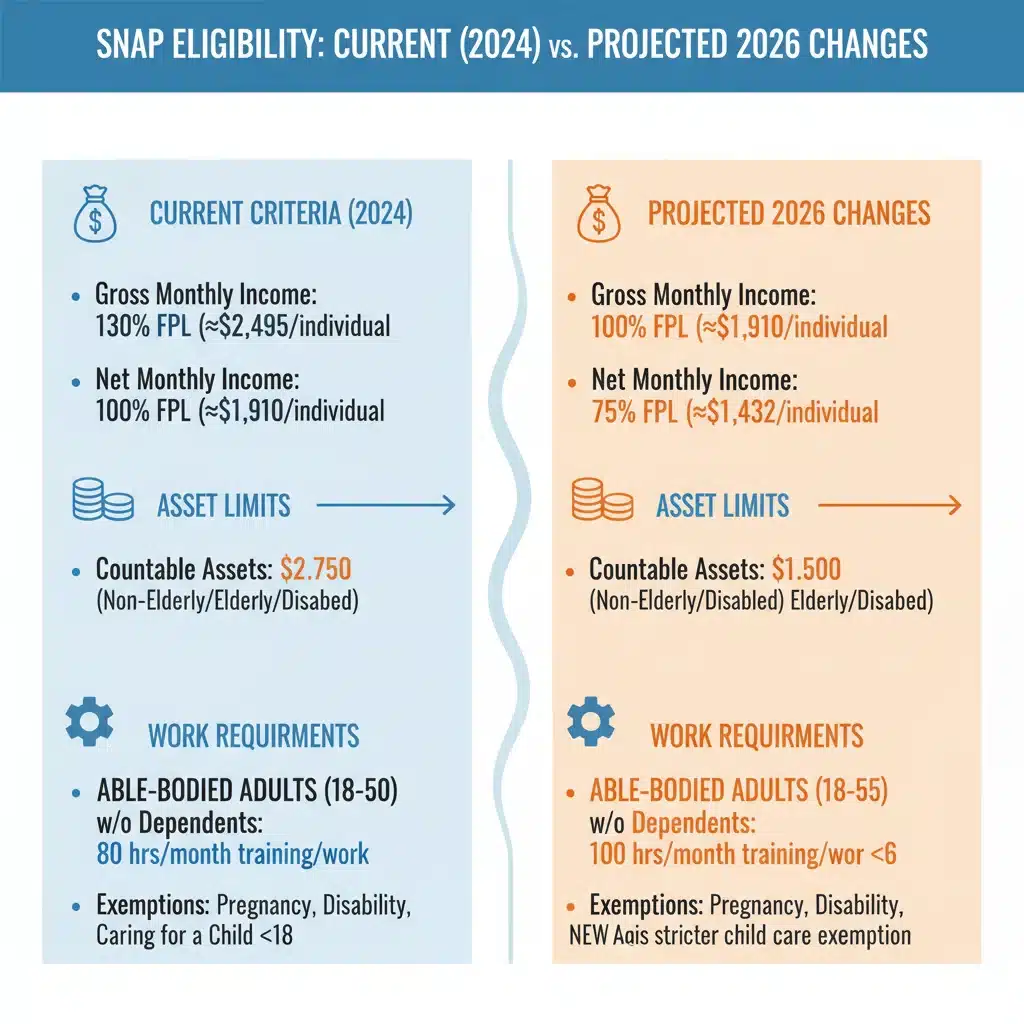
These potential changes to eligibility criteria for 2026 SNAP benefits underscore a broader policy discussion about the balance between providing essential support and fostering economic independence. Any alteration will undoubtedly have significant ramifications for millions of individuals and families across the nation.
The Proposed 5% Increase in Allotments for 2026 SNAP Benefits
Beyond eligibility, one of the most widely discussed aspects of the 2026 SNAP benefits is the potential for a 5% increase in benefit allotments. This proposed increase is not arbitrary; it stems from a combination of factors, including inflation, the rising cost of food, and ongoing evaluations of the adequacy of current benefits.
Why a 5% Increase? The Data Behind the Proposal
The call for a 5% increase in 2026 SNAP benefits is largely driven by:
- Inflationary Pressures: The past few years have seen significant inflation, particularly in food prices. While the Thrifty Food Plan is updated annually, these updates sometimes lag behind real-time cost increases, leaving recipients with less purchasing power. A 5% increase would help bridge this gap, ensuring that benefits keep pace with the actual cost of groceries.
- Adequacy of Current Benefits: Numerous studies and advocacy groups have consistently argued that current SNAP benefits are often insufficient to provide a truly nutritious diet throughout the entire month, especially for larger families or those in high-cost areas. A 5% boost would represent a tangible step towards improving food security.
- Economic Stimulus: Research has shown that SNAP benefits are one of the most effective forms of economic stimulus, as recipients typically spend their benefits quickly on necessities, injecting money directly into local economies. A 5% increase would amplify this effect.
- Health Outcomes: Adequate nutrition is directly linked to better health outcomes. By increasing benefits, the program aims to reduce diet-related diseases and improve overall public health, leading to long-term savings in healthcare costs.
A 5% increase, while seemingly modest, could translate into a meaningful difference for households struggling to make ends meet. For a family of four receiving the maximum benefit, this could mean an additional $45-50 per month, which can significantly impact their ability to purchase fresh produce, lean proteins, and other essential items.
Impact on Recipients and the Economy
The implications of a 5% increase in 2026 SNAP benefits are far-reaching:
- Improved Food Security: The most direct impact would be an improvement in food security for millions. Households would have greater flexibility in their food choices and potentially reduce reliance on less nutritious, cheaper options.
- Enhanced Nutritional Outcomes: With more purchasing power, recipients could afford a wider variety of healthy foods, leading to better dietary quality and improved health.
- Reduced Poverty: While SNAP is not a poverty alleviation program in itself, it significantly reduces the depth of poverty for many households. A benefit increase would further strengthen this role.
- Boost to Local Economies: The additional funds would flow directly into grocery stores and farmers’ markets, supporting local businesses and agricultural producers.
This proposed increase for 2026 SNAP benefits is a critical component of ensuring the program remains relevant and effective in addressing contemporary challenges of food insecurity and economic hardship.
Comparative Analysis: Current vs. 2026 SNAP Benefits
To fully grasp the magnitude of the upcoming changes, a direct comparison between the current framework and the projected 2026 SNAP benefits is essential. This section will present a data-backed look at how these modifications could play out.
Eligibility: A Shift in Demographics?
If the income thresholds are indeed raised, we could see a notable expansion in the number of eligible households. For instance, if the gross income limit moves from 130% to 150% of the FPL, an estimated additional X million individuals (based on current poverty data and income distribution models) could become eligible. This would mean that 2026 SNAP benefits would reach a broader segment of the working poor, potentially including those who currently earn just enough to be excluded but still face significant food insecurity.
Similarly, revised asset limits would allow a greater number of elderly and disabled individuals to qualify without having to deplete modest savings or sell essential assets. This would promote greater financial stability and reduce the stress associated with balancing asset preservation and food access.
Benefit Allotments: Real-World Impact of a 5% Increase
Let’s consider a practical example. A single mother with two children, with a net monthly income of $1,500, currently receives approximately $600 in SNAP benefits (this is a hypothetical example, actual amounts vary). A 5% increase in 2026 SNAP benefits would boost her monthly allotment by $30, bringing her total to $630. While $30 might seem small, it could cover the cost of several gallons of milk, a package of chicken, or a week’s supply of fresh vegetables, making a tangible difference in her family’s nutrition.
Across all SNAP recipients, a 5% increase would inject billions of additional dollars into the food economy annually, providing a significant boost to both families and the broader agricultural and retail sectors. This data underscores the dual benefit of such an increase: direct support for families and indirect economic stimulation.
Challenges and Considerations for 2026 SNAP Benefits
While the prospect of enhanced 2026 SNAP benefits is largely positive, it’s crucial to acknowledge the challenges and considerations that accompany such significant policy changes. Implementing these modifications effectively will require careful planning, robust funding, and continuous evaluation.
Funding and Budgetary Constraints
Any expansion of eligibility or increase in benefit allotments will naturally come with a higher price tag. Securing the necessary federal funding will be a primary challenge, requiring bipartisan support and a clear articulation of the long-term benefits of investing in food security. Economic forecasts and budget projections will play a critical role in determining the feasibility and scale of the proposed changes for 2026 SNAP benefits.
Administrative Burden and State Implementation
Changes to eligibility rules and benefit calculations can place a significant administrative burden on state agencies responsible for processing SNAP applications and managing caseloads. States will need adequate resources, updated IT systems, and trained personnel to implement the new regulations smoothly. Without proper support, delays and inefficiencies could hinder the delivery of 2026 SNAP benefits to those who need them most.
Public Perception and Political Will
The SNAP program often faces scrutiny and becomes a subject of political debate. Shaping public perception and maintaining political will to support these enhancements will be vital. Advocates will need to continue highlighting the program’s effectiveness in combating hunger and its positive economic impacts, ensuring that the focus remains on evidence-based policy rather than ideological divides.
Monitoring and Evaluation
Once the 2026 SNAP benefits changes are implemented, robust monitoring and evaluation mechanisms will be essential. This includes tracking the number of new recipients, assessing the impact on food insecurity rates, analyzing nutritional outcomes, and evaluating the economic effects. This data will be crucial for making future adjustments and ensuring the program remains effective and accountable.
Preparing for the Future: What Recipients and Stakeholders Should Do
For current and potential SNAP recipients, as well as advocacy groups, policymakers, and service providers, preparing for the 2026 SNAP benefits changes is key. Proactive steps can help ensure a smooth transition and maximize the positive impacts of the program.
For Current and Potential Recipients:
- Stay Informed: Regularly check official USDA and state SNAP agency websites for updates. Legislative processes can be fluid, and information may evolve.
- Review Eligibility: Even if you were previously ineligible, or if your circumstances change, re-evaluate your potential eligibility once the new 2026 SNAP benefits rules are finalized.
- Document Everything: Keep meticulous records of income, expenses, and assets. This will expedite the application or recertification process under new guidelines.
- Connect with Local Resources: Reach out to local food banks, community organizations, and social service agencies. They often have the most up-to-date information and can provide assistance with applications.
For Advocacy Groups and Service Providers:
- Engage in Policy Discussions: Continue to advocate for policies that strengthen SNAP and ensure its accessibility and adequacy. Provide data-backed insights to policymakers.
- Educate the Public: Disseminate accurate information about the 2026 SNAP benefits changes to your communities and client bases. Host informational sessions and workshops.
- Prepare for Increased Caseloads: Anticipate a potential increase in applications and inquiries following eligibility expansions. Secure necessary funding and resources to meet this demand.
- Collaborate with State Agencies: Work closely with state SNAP administrators to understand implementation plans and identify potential challenges or areas for improvement.
Conclusion: A New Era for Food Assistance with 2026 SNAP Benefits
The anticipated changes to 2026 SNAP benefits mark a pivotal moment for food assistance in the United States. With potential adjustments to eligibility requirements and a significant 5% increase in allotments, the program is poised to adapt to contemporary economic realities and address persistent challenges of food insecurity. While the final details will depend on legislative outcomes, the discussions underscore a commitment to strengthening this vital safety net.
The data-backed analysis presented here highlights the profound impact these changes could have on millions of Americans, improving nutritional outcomes, reducing poverty, and injecting crucial funds into local economies. However, successful implementation will hinge on overcoming budgetary constraints, administrative hurdles, and maintaining strong political support.
As we move towards 2026, staying informed, advocating for effective policies, and preparing for these shifts will be paramount. The future of 2026 SNAP benefits holds the promise of a more resilient and responsive food assistance program, one that can better serve the needs of vulnerable populations and contribute to a healthier, more food-secure nation.
The dialogue surrounding SNAP is ongoing, and as new information becomes available, it is essential to remain engaged and adaptable. The ultimate goal is to ensure that every individual and family has consistent access to the nutritious food they need to thrive.
Autor