
Social Security Updates 2026: Navigating Benefit Adjustments
As we inch closer to 2026, millions of Americans are keenly watching for Social Security updates that will invariably shape their financial landscape. Social Security, a cornerstone of retirement planning for generations, is a dynamic program subject to annual adjustments and periodic legislative reviews. Understanding these impending changes is not just beneficial; it’s essential for effective financial planning, especially for those nearing or already in retirement. The year 2026 holds particular significance due to ongoing discussions about the program’s long-term solvency and the economic factors influencing its structure. This comprehensive guide will delve into the anticipated Social Security 2026 updates, exploring potential benefit adjustments, eligibility criteria shifts, and the broader implications for beneficiaries and future retirees.
Anúncios
The Social Security Administration (SSA) makes various adjustments each year, most notably the Cost-of-Living Adjustment (COLA), which aims to keep pace with inflation. However, beyond COLA, other parameters like the maximum taxable earnings, the earnings test limits, and even the full retirement age can be subject to review. For 2026, the focus will likely extend to how these adjustments interact with broader economic trends, healthcare costs, and demographic shifts. Our goal is to provide a clear, concise, and actionable overview of what you need to know to prepare for these changes and optimize your Social Security benefits.
Understanding the Cost-of-Living Adjustment (COLA) for 2026
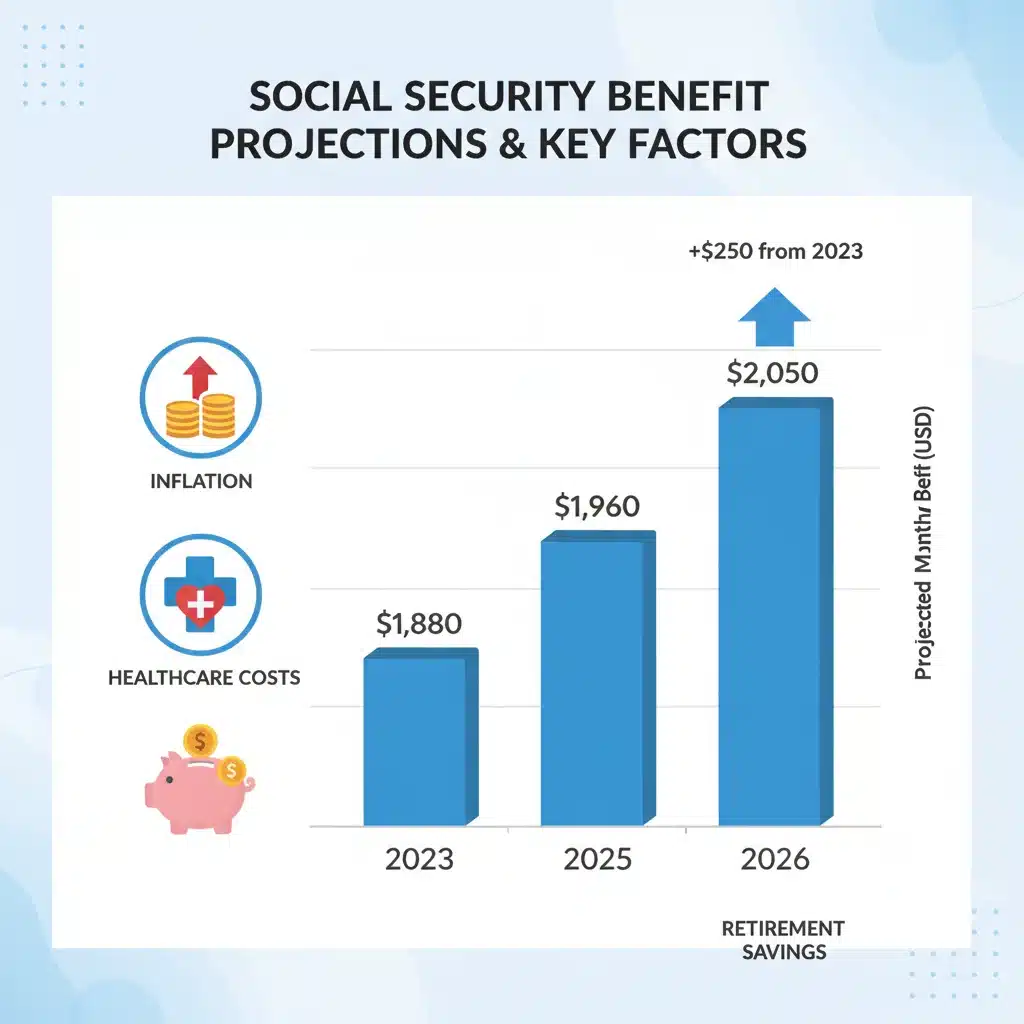
The Cost-of-Living Adjustment (COLA) is perhaps the most anticipated annual change for Social Security beneficiaries. Designed to protect the purchasing power of benefits from inflation, COLA ensures that the value of your benefits doesn’t erode over time. The COLA for 2026 will be determined by the Consumer Price Index for Urban Wage Earners and Clerical Workers (CPI-W) from the third quarter of 2025 compared to the third quarter of 2024. While the exact figure won’t be known until late 2025, economic forecasts and inflationary pressures will give us early indications.
Anúncios
How COLA is Calculated
The calculation of COLA is straightforward but relies on future economic data. The SSA compares the average CPI-W for July, August, and September of the current year (in this case, 2025) with the average for the same three months of the last year in which a COLA was payable. The percentage increase, if any, is the COLA for the following year. If there is no increase, benefits remain unchanged. Historically, COLAs have varied significantly, reflecting economic volatility. For instance, periods of high inflation have led to substantial increases, while periods of low inflation have resulted in minimal or no adjustments. For Social Security 2026, the ongoing global economic landscape, supply chain issues, and energy prices will be critical determinants.
Impact of COLA on Beneficiaries
A higher COLA means a larger monthly benefit payment, which can be crucial for retirees on fixed incomes. However, it’s also important to consider how COLA interacts with Medicare Part B premiums. By law, if your Part B premium increase is higher than your COLA increase, your net Social Security benefit cannot decrease. This ‘hold harmless’ provision protects many beneficiaries, though it has exceptions, particularly for new enrollees or those with higher incomes. Understanding this interplay is vital when assessing the real-world impact of the 2026 COLA on your net disposable income.
Potential Changes to Maximum Taxable Earnings in 2026
Another significant annual adjustment concerns the maximum amount of earnings subject to Social Security taxes. This figure, known as the ‘Social Security wage base,’ typically increases each year based on the national average wage index. For 2026, we can expect this limit to rise, impacting higher-income earners and their contributions to the system.
What is the Maximum Taxable Earnings Limit?
The Social Security tax (FICA tax) is levied on earnings up to a certain threshold. Any income earned above this threshold is not subject to Social Security taxes, nor does it count towards future Social Security benefits. This limit is adjusted annually to reflect changes in the national average wage. For example, if the limit for 2025 was X, it is highly probable that the limit for Social Security 2026 will be X plus an increment. This adjustment is crucial for both employees and self-employed individuals, as it dictates how much of their income is subject to the 6.2% employee share (or 12.4% for self-employed) Social Security tax.
Implications for Workers and Employers
For high-income earners, an increase in the maximum taxable earnings means a larger portion of their income will be subject to Social Security taxes. This translates to a higher tax liability for both the individual and their employer. While it means contributing more to the system, it also means that a larger portion of their lifetime earnings will be considered when calculating their future Social Security benefits, potentially leading to higher benefits in retirement. Employers also face increased payroll tax expenses as the wage base rises. Staying informed about this change is critical for payroll departments and financial planners.
Eligibility Criteria and Full Retirement Age (FRA) for 2026
The full retirement age (FRA) is a crucial determinant of when you can receive 100% of your Social Security benefits. While changes to the FRA are typically legislated and not annual adjustments, the cohort reaching retirement age in 2026 will be impacted by the existing schedule of FRA increases. It’s important to understand where you stand in this schedule.
Full Retirement Age Schedule
The FRA is gradually increasing from 65 to 67, depending on your birth year. For individuals born in 1959, the FRA is 66 and 10 months. For those born in 1960 and later, the FRA is 67. Therefore, individuals turning 66 or 67 in 2026 will need to consult the SSA’s official schedule to determine their precise FRA. Claiming benefits before your FRA results in a permanent reduction, while delaying benefits past your FRA (up to age 70) can lead to increased benefits through delayed retirement credits.

Earning Limits for Early Claimers
For those who choose to claim Social Security benefits before their full retirement age and continue to work, there are annual earnings limits. If your earnings exceed these limits, your benefits will be temporarily reduced. For every $2 you earn above the limit, $1 is withheld from your benefits. In the year you reach your FRA, the limit is higher, and the reduction rate is $1 for every $3 earned above the limit. Once you reach your FRA, the earnings test no longer applies, and you can earn any amount without it affecting your benefits. The specific earnings limits for Social Security 2026 will be announced closer to the end of 2025, but they typically increase each year to account for wage growth.
Medicare Part B Premiums and Their Interaction with Social Security
Medicare Part B premiums are often deducted directly from Social Security benefits, creating a direct link between the two programs. The standard Part B premium is announced annually and can significantly impact the net Social Security benefit received by retirees. While separate from Social Security benefit calculations, the premium adjustments are a critical component of a retiree’s financial outlook.
Anticipated Medicare Part B Premium Adjustments
Medicare Part B premiums are influenced by several factors, including healthcare costs, utilization rates, and legislative changes. While it’s difficult to predict the exact premium for 2026, historical trends suggest a gradual increase. Beneficiaries should factor potential increases into their financial planning. Higher-income beneficiaries also pay an Income-Related Monthly Adjustment Amount (IRMAA), which adds to their Part B and Part D premiums. The income thresholds for IRMAA are also subject to annual adjustment, and these changes for Social Security 2026 will also be important to monitor.
The ‘Hold Harmless’ Provision Revisited
As mentioned earlier, the ‘hold harmless’ provision protects many Social Security beneficiaries from a reduction in their net benefits due to Medicare Part B premium increases. If your COLA is less than the increase in your Part B premium, your premium will be adjusted so that your monthly Social Security benefit does not decrease. This provision is a vital safety net for many, but it does not apply to everyone. Those who are not protected include new Medicare enrollees, those who do not have their Part B premiums deducted from Social Security, and high-income beneficiaries subject to IRMAA. Understanding your eligibility for ‘hold harmless’ is crucial for accurate financial forecasting.
Long-Term Solvency and Potential Legislative Changes Affecting Social Security 2026
Beyond the annual adjustments, the long-term solvency of the Social Security program is a perennial topic of discussion in Washington. While major legislative overhauls are less frequent, the ongoing debate can influence the program’s future direction, potentially leading to significant changes in later years that beneficiaries should be aware of.
The Social Security Trust Funds
The Social Security program is financed through dedicated payroll taxes. These taxes fund the Old-Age and Survivors Insurance (OASI) and Disability Insurance (DI) Trust Funds. According to the latest Trustees’ Report, the combined trust funds are projected to be able to pay 100% of promised benefits until a certain year, after which they would be able to pay a reduced percentage if no legislative action is taken. The precise year is subject to revision with each report, but the general trend indicates a need for future adjustments. While 2026 might not see immediate legislative changes to address long-term solvency, the discussions and proposals will certainly continue to shape the outlook for future Social Security 2026 beneficiaries.
Proposed Reforms and Their Impact
Various proposals have been put forth to strengthen Social Security’s financial standing. These include raising the full retirement age further, increasing the payroll tax rate, adjusting the COLA calculation method, or raising the maximum taxable earnings limit more aggressively. Each of these proposals has different implications for current and future beneficiaries. While it’s unlikely that any major reform will be enacted and implemented by 2026, staying abreast of these discussions is important for understanding the potential long-term trajectory of your benefits. Any legislative changes would likely be phased in over several years, but the groundwork for such changes might be laid well in advance.
Planning Your Retirement Strategy Around Social Security 2026 Updates
Navigating the complexities of Social Security requires careful planning. With the anticipated updates for 2026, it’s an opportune time to revisit your retirement strategy and ensure it aligns with the latest information. Proactive planning can help you maximize your benefits and secure your financial future.
Reviewing Your Social Security Statement
The first step in effective planning is to understand your current benefit estimates. The Social Security Administration provides an annual statement that details your earnings record and estimated benefits at different claiming ages. You can access your statement online by creating a ‘my Social Security’ account. Reviewing this statement regularly, especially in light of upcoming Social Security 2026 changes, will help you assess your projected income and identify any discrepancies in your earnings record.
Considering Your Claiming Age
The decision of when to claim Social Security benefits is one of the most significant retirement choices you’ll make. Claiming early (as early as age 62) results in permanently reduced benefits, while delaying until your full retirement age or even age 70 can significantly increase your monthly payment. Factors to consider include your health, life expectancy, other sources of income, and your spouse’s benefits. The 2026 updates, particularly regarding COLA and earnings limits, should be incorporated into this crucial decision-making process.
Integrating Social Security with Other Retirement Savings
Social Security is intended to be one leg of a three-legged stool for retirement income, alongside pensions and personal savings. It’s crucial to view your Social Security benefits as part of a larger financial picture. Understanding the 2026 updates can help you adjust your other retirement savings strategies, such as 401(k)s, IRAs, and other investments. For instance, if COLA projections are lower than anticipated, you might need to increase your personal savings rate or adjust your withdrawal strategy from other accounts to maintain your desired lifestyle in retirement.
Seeking Professional Financial Advice
Given the intricacies of Social Security and its interaction with other financial planning elements, consulting a qualified financial advisor is often beneficial. An advisor can help you understand how the Social Security 2026 updates specifically apply to your situation, develop a personalized claiming strategy, and integrate your Social Security benefits seamlessly into your overall retirement plan. They can also help you navigate potential tax implications and optimize your income streams.
Impact on Specific Groups of Beneficiaries
The Social Security updates for 2026 will not affect all beneficiaries equally. Different groups, such as current retirees, those nearing retirement, and individuals with disabilities, may experience distinct impacts.
Current Retirees
For current retirees, the primary impact will be from the COLA. A higher COLA will mean more disposable income, while a lower one might necessitate tighter budgeting. The interaction with Medicare Part B premiums will also be a key factor. Current retirees generally have less flexibility to adjust their claiming strategies, making COLA and Medicare changes particularly significant.
Those Nearing Retirement (Ages 55-65)
Individuals in this age bracket have a critical window to make decisions about when to claim benefits. Understanding the 2026 full retirement age, potential changes to earnings limits, and future COLA projections can significantly influence their claiming strategy. They may also be more impacted by changes to the maximum taxable earnings if they are still working and earning a high income.
Individuals with Disabilities
Social Security Disability Insurance (SSDI) beneficiaries also receive COLA adjustments. While the eligibility criteria for disability benefits are distinct, the annual COLA ensures their benefits keep pace with inflation. Changes to the earnings limits for those receiving disability benefits and attempting to return to work (through programs like the Ticket to Work) will also be relevant.
Spousal and Survivor Benefits
Spousal and survivor benefits are also subject to COLA adjustments. The rules for claiming these benefits can be complex, and any changes to the primary beneficiary’s record (e.g., through delayed retirement credits) can affect the benefits of their spouse or survivors. Understanding the Social Security 2026 updates is important for families planning for these eventualities.
The Role of Economic Indicators in 2026 Social Security Updates
Several economic indicators play a pivotal role in shaping the annual Social Security adjustments. Keeping an eye on these can provide early insights into what to expect for 2026.
Inflation Rates (CPI-W)
As discussed, the CPI-W is the primary driver of the COLA. Higher inflation rates generally lead to higher COLAs. Monitoring inflation trends throughout 2025 will be key to forecasting the 2026 COLA. Factors such as energy prices, food costs, and housing expenses all contribute to the CPI-W.
Wage Growth (National Average Wage Index)
The National Average Wage Index (NAWI) determines the maximum taxable earnings limit and other Social Security thresholds. Strong wage growth typically leads to an increase in this limit, impacting higher earners’ contributions and future benefits. Economic reports on employment and wage trends will be indicative of the 2026 NAWI.
Healthcare Costs
Healthcare costs heavily influence Medicare Part B premiums. While not directly part of Social Security benefits, the interaction is significant. Trends in healthcare spending, prescription drug costs, and medical technology advancements will all contribute to the 2026 Medicare premium adjustments, which in turn affect the net Social Security benefit for many.
Preparing for the Future: Beyond 2026
While this article focuses on the Social Security 2026 updates, it’s crucial to adopt a long-term perspective. Social Security is a program that evolves, and understanding its trajectory can help you make informed decisions for decades to come.
Stay Informed and Adapt Your Plan
The most important advice is to stay informed. The Social Security Administration (SSA) is the official source for all updates. Regularly check their website, review your annual statement, and pay attention to news from reputable financial outlets. As new information emerges, be prepared to adapt your retirement plan accordingly. Financial planning is not a static process; it requires continuous review and adjustment.
Advocate for the Program’s Future
Engaging in discussions about Social Security’s long-term solvency is also important. As a beneficiary or future beneficiary, your voice matters in shaping the program’s future. Understanding the various proposals and their potential impacts can help you advocate for policies that support your financial well-being and the well-being of future generations.
Conclusion
The Social Security 2026 updates, encompassing the Cost-of-Living Adjustment, changes to maximum taxable earnings, and the ongoing full retirement age schedule, are critical components of retirement planning for millions of Americans. While the exact figures will solidify closer to the end of 2025, understanding the mechanisms behind these adjustments and their potential implications allows for proactive and informed decision-making. By reviewing your Social Security statement, carefully considering your claiming age, integrating benefits with other savings, and seeking professional advice, you can confidently navigate these changes and secure a stable financial future. Staying informed about economic indicators and participating in the broader conversation about Social Security’s long-term health will empower you to make the best choices for your retirement journey, both in 2026 and beyond.