Right to Repair: New Legislation & Electronics in 2026
Anúncios
Your Right to Repair: New Legislation and How It Affects Electronics in 2026
In an increasingly digital world, our lives are inextricably linked to electronic devices. From smartphones and laptops to smart home appliances and even electric vehicles, technology permeates every facet of our existence. Yet, for years, consumers have faced a frustrating reality: when these devices inevitably break down, repairing them often proves to be a costly, complicated, or even impossible endeavor. This challenge has fueled a growing global movement known as the Right to Repair, advocating for consumers’ ability to fix their own products or have them repaired by independent technicians.
Anúncios
The good news is that significant changes are on the horizon. As we approach 2026, new legislation surrounding the right to repair legislation is set to reshape the landscape of electronics ownership and maintenance. This isn’t just a minor tweak; it represents a fundamental shift in power dynamics, aiming to empower consumers, foster sustainability, and challenge the prevailing culture of planned obsolescence. Understanding these upcoming changes is crucial for every consumer, independent repair shop, and electronics manufacturer alike.
What Exactly is the Right to Repair?
At its core, the Right to Repair is a legislative concept that aims to remove barriers preventing consumers and independent repair businesses from repairing electronic and other products. For decades, manufacturers have employed various tactics that make repairs difficult, such as:
Anúncios
- Proprietary Parts and Tools: Requiring specialized, often expensive, tools or parts only available from the original manufacturer.
- Software Locks: Using software to prevent components from functioning if they aren’t ‘authorized’ by the manufacturer, even if they are genuine parts.
- Lack of Documentation: Withholding repair manuals, schematics, and diagnostic software from the public and independent repair shops.
- Glued-Together Designs: Manufacturing products that are nearly impossible to disassemble without causing damage, effectively making them unrepairable.
- Voiding Warranties: Threatening to void warranties if a product is opened or repaired by anyone other than an authorized service provider.
These practices have contributed to a ‘throwaway’ culture, where consumers are often pushed towards buying new devices rather than repairing existing ones. This not only burdens consumers financially but also exacerbates environmental problems by increasing electronic waste, or ‘e-waste’. The right to repair legislation seeks to dismantle these barriers, promoting a more sustainable and consumer-friendly approach to product ownership.
The Driving Forces Behind the Right to Repair Movement
The momentum for the Right to Repair has been building for years, driven by a confluence of factors:
Consumer Frustration
Consumers are tired of expensive repairs, short product lifespans, and the inability to fix their own belongings. The idea that a perfectly functional device could be rendered useless by a minor, fixable component failure is a source of widespread frustration. The cost of replacing a screen or a battery often approaches the cost of a new device, leading to unnecessary purchases.
Environmental Concerns (E-Waste)
The sheer volume of electronic waste generated globally is staggering. Landfills are overflowing with discarded electronics containing hazardous materials, posing significant environmental and health risks. Extending the lifespan of devices through repair is a critical step towards reducing e-waste and promoting a circular economy. The right to repair legislation is a key component in this environmental strategy.
Economic Impact
Independent repair shops are vital local businesses that provide affordable repair options and create jobs. Manufacturer-imposed restrictions stifle competition and concentrate repair services within a few authorized channels, often at higher prices. The Right to Repair aims to level the playing field, allowing these businesses to thrive and offer more accessible services to their communities.
Technological Independence
In an era where technology is deeply integrated into our lives, having control over our devices is increasingly seen as a fundamental right. The ability to understand, modify, and repair the tools we rely on fosters technological literacy and independence, rather than fostering a complete reliance on manufacturers.
Key Provisions Expected in 2026 Right to Repair Legislation
While the specifics of the right to repair legislation may vary by region (e.g., EU, various US states, UK), several common themes and provisions are expected to be central to the laws coming into effect around 2026. These provisions are designed to address the core issues that have historically hindered repairability:
Mandatory Access to Parts and Tools
One of the most significant changes will be the requirement for manufacturers to make spare parts and specialized tools readily available to consumers and independent repair shops at fair and reasonable prices. This means no more proprietary parts that only the manufacturer can supply, or tools that cost more than the device itself. This is a cornerstone of effective right to repair legislation.
Availability of Repair Manuals and Schematics
Manufacturers will likely be mandated to provide comprehensive repair manuals, diagnostic software, and schematics to the public. This information, often considered trade secrets, is essential for accurate troubleshooting and repair. With this knowledge, independent technicians and skilled individuals can perform repairs without guesswork.
No More Software Locks on Genuine Parts
Legislation will likely target practices where software prevents genuine, third-party components from functioning correctly. For example, if you replace a screen on your smartphone with a perfectly good aftermarket screen, the device should not display error messages or disable features because the part wasn’t ‘authorized’ by the original manufacturer. This specific aspect of right to repair legislation is crucial for modern electronics.
Design for Repairability
While not always a direct mandate, the spirit of the Right to Repair encourages manufacturers to design products with repairability in mind. This could lead to a shift away from heavily glued components and towards modular designs that allow for easier disassembly and replacement of individual parts. Although direct ‘design for repair’ mandates might be harder to enforce, the other provisions will naturally push manufacturers in this direction.
Extended Availability of Parts
Legislation may also stipulate how long manufacturers must continue to supply spare parts after a product has been discontinued. This ensures that devices don’t become obsolete simply because a crucial part is no longer available, extending their useful life. This long-term commitment is a key benefit of the new right to repair legislation.
Who Benefits from the Right to Repair Legislation?
The impact of this new legislation will be far-reaching, benefiting multiple stakeholders:
Consumers
- Cost Savings: The most immediate benefit is the potential for significant cost savings. Repairing a device is almost always cheaper than replacing it.
- Extended Product Lifespan: Devices will last longer, reducing the frequency of new purchases.
- More Repair Options: A wider choice of repair services, from independent shops to DIY, will be available.
- Empowerment: Greater control over the products they own.
Independent Repair Shops
- Increased Business: Access to parts, tools, and manuals will allow them to service a wider range of devices, boosting their business.
- Fair Competition: The playing field will be leveled, allowing them to compete more effectively with authorized service centers.
- Innovation: More opportunities for repair innovation and specialization.
The Environment
- Reduced E-Waste: Extending product lifespans directly translates to less electronic waste ending up in landfills.
- Lower Carbon Footprint: Manufacturing new electronics is resource-intensive. Repairing existing ones reduces the demand for new production and the associated environmental impact.
- Resource Conservation: Less need to extract raw materials for new devices.
Manufacturers (Long-Term)
While some manufacturers have resisted the Right to Repair, viewing it as an infringement on their intellectual property or a threat to their business model, there are long-term benefits:
- Improved Brand Loyalty: Consumers appreciate transparency and products that are built to last and easily repairable. This can foster greater trust and loyalty.
- Innovation in Design: Forced to think about repairability, manufacturers might innovate new modular designs that are more efficient to produce and maintain.
- New Revenue Streams: Selling parts and providing repair documentation can become new sources of income.
- Meeting Consumer Demand: Aligning with growing consumer demand for sustainable and repairable products.
Challenges and Criticisms of the Right to Repair
Despite its broad support, the Right to Repair movement faces legitimate challenges and criticisms:
Security and Safety Concerns
Manufacturers often argue that allowing unauthorized repairs could compromise product safety (e.g., faulty battery replacements leading to fires) or data security. While these concerns are valid, proponents argue that proper documentation and certification for independent repair shops can mitigate these risks. The right to repair legislation needs to balance accessibility with safety standards.
Intellectual Property
Manufacturers claim that sharing schematics and diagnostic tools infringes on their intellectual property. However, advocates counter that once a product is sold, the consumer owns it and should have the right to repair it, much like owning a car and being able to choose where to service it.
Complexity of Modern Electronics
Modern devices are incredibly complex and miniaturized, making repairs challenging even for skilled technicians. Some argue that DIY repairs could lead to more damage than good. The legislation aims to provide the necessary resources, but the inherent complexity remains a factor.
Warranty Voiding
The issue of warranties is a contentious point. Current policies often void warranties if unauthorized repairs are attempted. Future legislation will likely need to address this, perhaps by distinguishing between genuine repair attempts and user-induced damage.
How the Right to Repair Legislation in 2026 Will Affect You
As 2026 approaches, the changes brought about by the right to repair legislation will start to become tangible. Here’s a glimpse of what you, as a consumer, can expect:
Easier Access to Repair Information
Need to replace a component in your laptop? You’ll likely find official repair manuals and diagnostic tools much more accessible online, either directly from the manufacturer or through public databases. This transparency will be a game-changer for DIY enthusiasts and independent technicians.
Affordable and Available Spare Parts
The days of struggling to find a specific part for your washing machine or smartphone will hopefully be behind us. Manufacturers will be required to sell spare parts directly to consumers and independent repair shops, reducing reliance on expensive authorized service centers. This provision of the right to repair legislation is particularly impactful.
More Competitive Repair Market
With independent shops gaining access to the same resources as authorized centers, expect a more competitive repair market. This could lead to lower repair costs and a wider variety of repair services available in your local community.
Longer Lasting Devices
The cumulative effect of easier repairs, accessible parts, and manufacturer design considerations will mean your electronic devices are likely to have a significantly longer lifespan. This means less frequent upgrades and more value for your money.
A Shift in Consumer Mindset
Beyond the practical implications, the Right to Repair could foster a cultural shift. Consumers may become more inclined to repair rather than replace, developing a greater appreciation for the longevity and sustainability of their products. This aligns with a broader movement towards mindful consumption and away from disposable culture.
Global Movement: Beyond 2026
While 2026 marks a significant milestone for the right to repair legislation, it’s important to remember that this is a global movement with ongoing evolution. Various regions are at different stages of implementing and enforcing these laws:
European Union
The EU has been a frontrunner in the Right to Repair, already implementing rules for certain appliances like washing machines, dishwashers, and refrigerators, requiring manufacturers to make spare parts available for up to 10 years. The scope is continually expanding, and 2026 will see further strengthening of these regulations, especially for electronics.
United States
In the US, the movement has primarily been driven by individual states. Massachusetts was a pioneer with its automotive Right to Repair law, and several other states, including New York, California, and Colorado, have passed or are considering similar legislation for electronics. Federal efforts are also underway, though progress has been slower. The fragmented nature of US legislation means that the impact in 2026 might vary significantly from state to state, though a broader trend towards supporting the right to repair legislation is undeniable.
United Kingdom
Following Brexit, the UK has also introduced its own Right to Repair laws, initially focusing on large household appliances. Like the EU, there’s an expectation that these regulations will expand to cover a wider array of electronics by 2026 and beyond.
Other Countries
Countries like Australia, Canada, and India are also seeing growing advocacy for Right to Repair laws, indicating a global consensus on the need for greater repairability and consumer control over electronics.
Preparing for the Right to Repair Future
For consumers, preparing for the right to repair legislation in 2026 means staying informed and being ready to exercise your new rights. Start thinking about repair as a primary option, rather than replacement. Research local independent repair shops and inquire about their services. When purchasing new devices, consider their repairability scores, which are becoming increasingly available through various consumer advocacy groups.
For independent repair businesses, now is the time to scale up, invest in training, and ensure you have the necessary tools and expertise to handle a wider range of devices. The increased availability of parts and manuals will be a boon, but staying ahead of technological advancements will be key to success.
For manufacturers, proactive engagement with the principles of the Right to Repair is essential. Companies that embrace repairability as a design philosophy and actively support their customers’ ability to repair will likely gain a significant competitive advantage and build stronger brand loyalty. Ignoring the trend could lead to regulatory penalties and a loss of consumer trust.
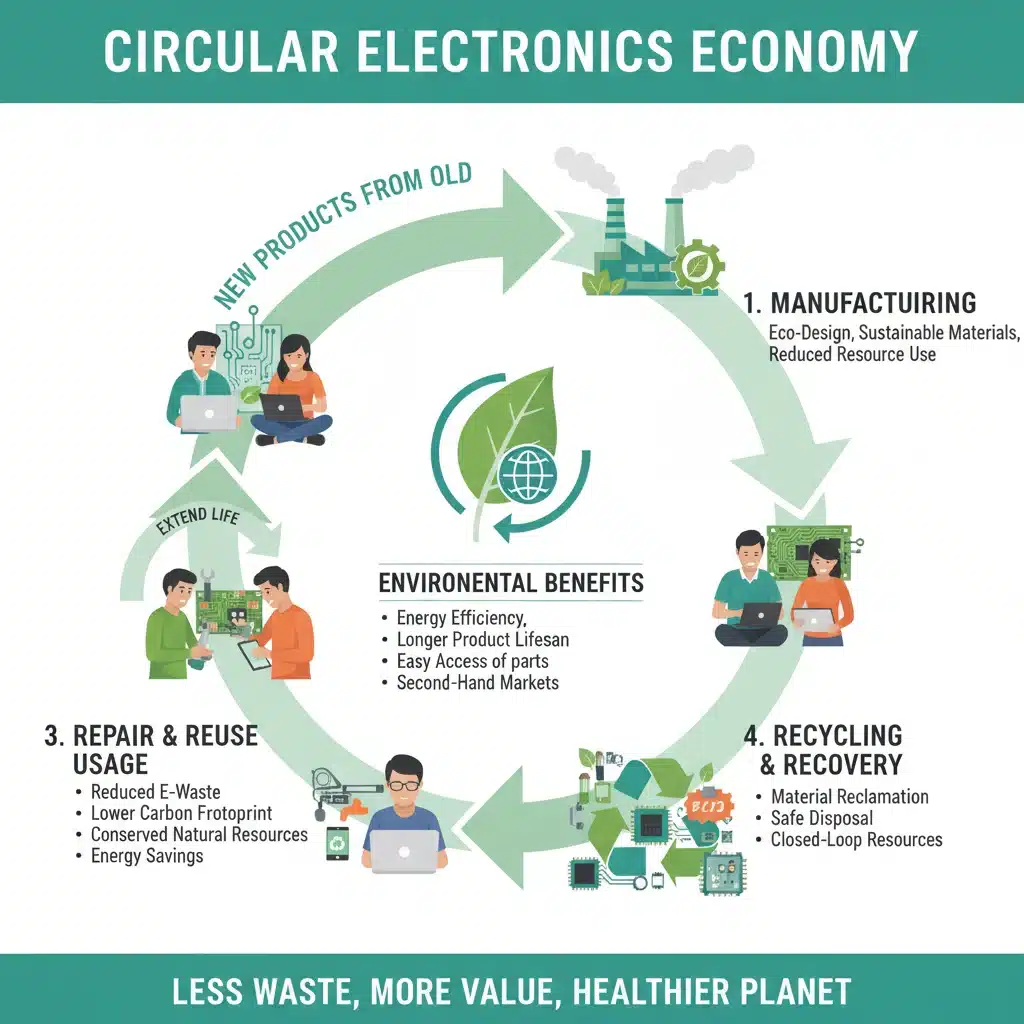
The Long-Term Vision: A Circular Economy
The Right to Repair is more than just about fixing a broken gadget; it’s a critical component of a larger vision for a circular economy. In a linear ‘take-make-dispose’ economy, resources are extracted, products are manufactured, used, and then discarded. A circular economy, in contrast, aims to keep resources in use for as long as possible, extract the maximum value from them while in use, then recover and regenerate products and materials at the end of each service life.
By extending product lifespans through repair, reuse, and refurbishment, the right to repair legislation directly contributes to this circular model. It reduces the demand for new raw materials, minimizes energy consumption associated with manufacturing, and significantly cuts down on waste. This not only benefits the environment but also creates new economic opportunities in the repair and refurbishment sectors.
Imagine a future where your smartphone, laptop, or refrigerator isn’t just a temporary possession but a long-term investment that can be maintained, upgraded, and repaired for many years. This is the promise of the Right to Repair, and 2026 marks a crucial step towards making that vision a reality.
Conclusion: Embracing a Repairable Future
The upcoming right to repair legislation in 2026 is poised to bring about a monumental shift in how we interact with our electronic devices. It represents a victory for consumer rights, environmental sustainability, and fair competition. By mandating access to parts, tools, and information, these laws will empower individuals and independent businesses to extend the life of electronics, reduce waste, and save money.
While challenges remain, the global movement towards greater repairability is undeniable. As we move closer to 2026, staying informed about these legislative changes will be key to understanding your rights and making the most of a future where repairing, rather than replacing, becomes the norm. Embrace the repairable future; it’s better for your wallet and better for the planet.
Autor